A growing chorus of public health experts is sounding a loud alarm. America’s disease response system — once the envy of the world — is cracking under pressure. The latest CDC health warning failures surrounding the hantavirus cruise ship outbreak have exposed deep institutional weaknesses. Scientists, former directors, and global health leaders are all asking the same urgent question: can the United States actually protect its citizens when the next serious health threat arrives?
The Breaking Point: A Crisis Years in the Making
Thousands of Scientists Gone
The CDC did not weaken overnight. The deterioration built gradually — and then accelerated sharply.
Over the past 16 months, the Trump administration withdrew from the WHO, restricted CDC scientists from communicating with international counterparts, and laid off thousands of CDC scientists and public health professionals — including members of the agency’s ship sanitation program. U.S. Department of Education
Those cuts were not abstract. When a deadly virus emerged on a cruise ship carrying Americans across the Atlantic, the people trained to respond immediately were simply no longer there.
Furthermore, without reliable, interoperable data systems, agencies are forced to rely on fragmented, manual processes that slow responses and create dangerous gaps in critical information, leaving communities exposed. Money
From Global Leader to Bystander
For decades, America set the global standard in outbreak response. Therefore, what happened during the MV Hondius hantavirus crisis shocked even veteran health officials.
No disease investigators were quickly dispatched. No televised news conference informed the public. No timely health alerts went out to doctors — despite a deadly virus outbreak involving American passengers making global headlines. NASFAA
Lawrence Gostin, an international public health expert at Georgetown University, captured the moment bluntly: “The CDC is not even a player. I’ve never seen that before.” Polymarket
What the CDC Health Warning System Looks Like Today
Slower, Quieter, and Less Visible
The contrast with past responses is jarring. Consider what the CDC did during the Diamond Princess COVID-19 outbreak in 2020.
During that crisis, the CDC sent personnel to the port, helped evacuate American passengers, ran quarantines, shared genetic data on the virus, coordinated with the WHO and Japan, held public briefings, and rapidly published reports that became the world’s reference data on cruise ship COVID transmission, according to former CDC Director Dr. Tom Frieden. Yahoo Finance
However, during the 2026 hantavirus outbreak, the agency stayed mostly silent for days. CDC action accelerated only late Friday — days into the crisis — when health officials finally confirmed they were sending a team to Spain’s Canary Islands to meet the Americans onboard. Polymarket
Anonymous Briefings and Misstated Facts
When the CDC finally did speak, the communication itself drew criticism.
At their first briefing — held by telephone only for invited reporters — officials pledged transparency but said the media could not cite speakers by name, under rules set by aides to Health Secretary Robert F. Kennedy Jr. Yahoo Finance
Moreover, CDC Acting Director Dr. Jay Bhattacharya’s first on-camera appearance came Saturday morning on Fox News, where he told Americans “please don’t worry” — and misstated key facts about the victims. Polymarket
Meanwhile, Jennifer Nuzzo, director of Brown University’s Pandemic Center, criticized the agency’s brief written statement as damaging, saying: “A core principle of public health communications is humility — and that statement had none.” Polymarket
The CDC Health Warning Gap: What Experts Are Most Worried About
“We Are Not Prepared”
The most alarming assessment came from the head of the nation’s largest infectious disease organization.
Dr. Jeanne Marrazzo, CEO of the Infectious Diseases Society of America, called the hantavirus outbreak “a sentinel event” that reveals how well — or poorly — the country can handle a disease threat. “And right now, I’m very sorry to say that we are not prepared,” she warned. U.S. Department of Education
That word — “sentinel” — carries specific meaning in public health. It means a warning signal. A preview of what a larger failure could look like.
The WHO Fills the Vacuum
Importantly, when the CDC stepped back, another institution stepped forward.
This time, the WHO took center stage. It made the risk assessment, led international communications, and told the world the outbreak did not constitute a pandemic threat — roles that historically belonged to the United States. NASFAA
WHO Director General Tedros Adhanom Ghebreyesus traveled to Tenerife personally to oversee the transfer of passengers and publicly stated: “This is not another COVID-19. The current public health risk from hantavirus remains low.” RSM US
Therefore, the global response was led by an organization the U.S. government formally withdrew from — a deeply uncomfortable irony for American public health advocates.
How Budget Cuts Directly Damaged the CDC’s Response Capacity
The layoffs at the CDC were not random. They targeted specific programs — and those cuts had real consequences during this outbreak.
Here is what America lost:
- Ship sanitation specialists — the team trained specifically for cruise ship disease events
- International disease investigators — scientists who would normally deploy within 24 hours
- WHO liaison staff — experts who maintained real-time communication with global partners
- Outbreak analytics personnel — data professionals who model transmission risk rapidly
- Public communications specialists — staff trained to craft fast, accurate, public-facing alerts
The American Public Health Association and 232 other organizations have formally requested $100 million for the CDC’s Center for Forecasting and Outbreak Analytics and $55 million for data integration systems — arguing these investments are critical for detecting and responding to disease threats. Money
So far, Congress has not acted on those requests.
The Bilateral Agreement Strategy: Why Experts Say It Cannot Work
The Trump administration replaced multilateral WHO partnerships with a network of one-on-one country agreements. However, health experts argue that strategy is structurally insufficient for global health crises.
About 30 bilateral agreements are currently in place. But Gostin argued: “You can’t possibly cover a global health crisis by doing one-on-one deals with countries here and there.” Fox Business
The hantavirus outbreak proved his point. It began in Argentina, spread on a Dutch ship, killed a German citizen, involved passengers from at least 12 countries, and docked in Spain. A network of 30 bilateral agreements could not match the speed and reach of the WHO’s established global infrastructure.
Therefore, the administration’s alternative health diplomacy model faced its first serious real-world test — and came up short, according to independent experts.
What the Hantavirus Itself Actually Threatens
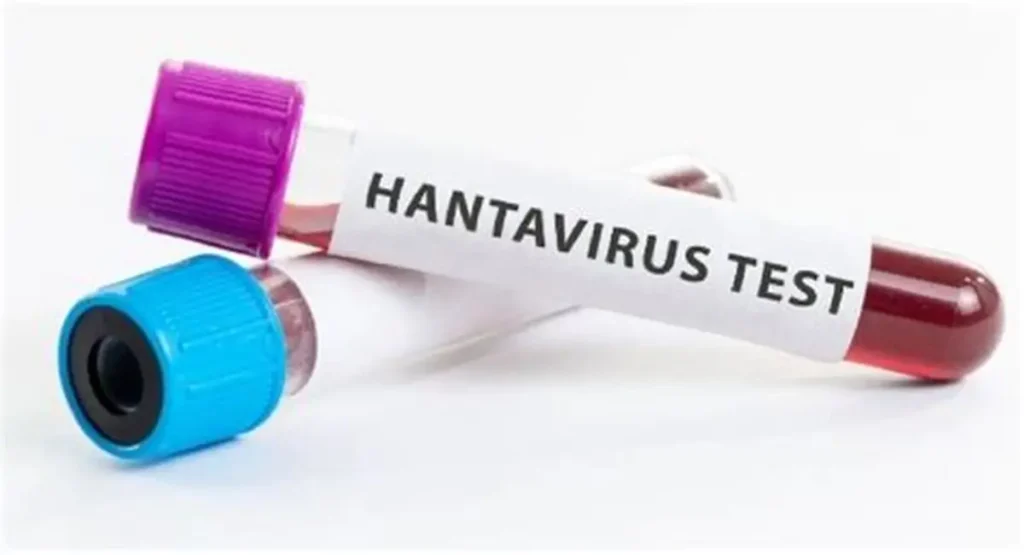
Hanta Virus
To be fair to the CDC, the virus at the center of this controversy is genuinely not a pandemic threat. Therefore, it is important to separate the outbreak risk from the institutional risk.
CDC officials stressed that transmission of the Andes hantavirus from person to person is rare, and the risk to the American public remains “extremely low.” RSM US
The virus does carry a serious fatality rate of 30% to 40% in those who develop symptoms. However, it does not spread easily through casual contact, air, or community transmission the way COVID-19, influenza, or measles do.
Experts say the outbreak has not spiraled precisely because hantavirus spreads very differently from COVID-19. Health professionals in other countries, not the United States, managed the primary response. U.S. Department of Education
So Americans are safe — this time. The worry is what happens next time, with a more contagious pathogen, and the same weakened response system.
What a Stronger CDC Health Warning System Would Look Like
Former officials and independent experts broadly agree on what needs to happen to restore America’s outbreak response capacity:
- Rehire specialized scientists — particularly in epidemiology, ship sanitation, and outbreak analytics
- Restore WHO engagement — formal partnership enables real-time global data sharing
- Rebuild the CDC’s public communications team — fast, clear, humble, and credible messaging saves lives
- Fund the Center for Forecasting and Outbreak Analytics — data modeling is the foundation of early response
- Modernize public health data systems — interoperable platforms allow state and federal agencies to share information instantly
- Return to open press briefings — anonymous telephone briefings undermine public trust during health crises
- Establish clear deployment protocols — disease investigators should be en route within 24 hours of a credible threat signal
What State Health Departments Are Doing Without Federal Leadership
In the absence of a fast federal CDC health warning, state agencies stepped in to fill the gap. However, the patchwork approach exposed coordination problems.
States including Arizona, California, Georgia, Texas, and Virginia all began independently monitoring returning cruise passengers — but without a unified federal framework guiding their protocols. The result was inconsistent messaging, varying monitoring timelines, and confusion about whether returning Americans faced mandatory health checks.
This kind of fragmentation is exactly what a functioning CDC is designed to prevent. Therefore, the state-by-state response — while well-intentioned — underscored how much coordination the federal agency normally provides.
The Bigger Picture: America’s Public Health Preparedness Score
Independent analysts who track global health preparedness have noted a consistent downward trend in U.S. scores since 2020. The key warning signs include:
- A shrinking federal public health workforce
- Reduced investment in disease surveillance infrastructure
- Withdrawal from multilateral health institutions
- Declining speed of official public communications during outbreaks
- Growing politicization of scientific messaging
Civil servants across the CDC and related agencies have begun speaking out against policies they say threaten public health — a rare and notable break from the traditionally apolitical posture of public health professionals. Money
Conclusion
The hantavirus outbreak of 2026 did not kill thousands of Americans. However, it delivered a warning that public health experts say the nation cannot afford to dismiss. The CDC health warning system — once the fastest, most credible, most globally connected outbreak response machine in the world — now struggles to respond visibly, quickly, and accurately to a moderate-scale international health event.
The virus on the MV Hondius was manageable. The institutional damage at the CDC is not yet. America dodged a serious crisis this time — not because its public health infrastructure performed well, but because the biology of the virus was forgiving.
That kind of luck does not hold forever. The next outbreak may not be so slow-spreading or so geographically contained. And if the CDC remains on the sidelines when that moment arrives, the cost will not be measured in credibility. It will be measured in lives.
Published by US Daily Briefs | usdailybriefs.com | May 10, 2026