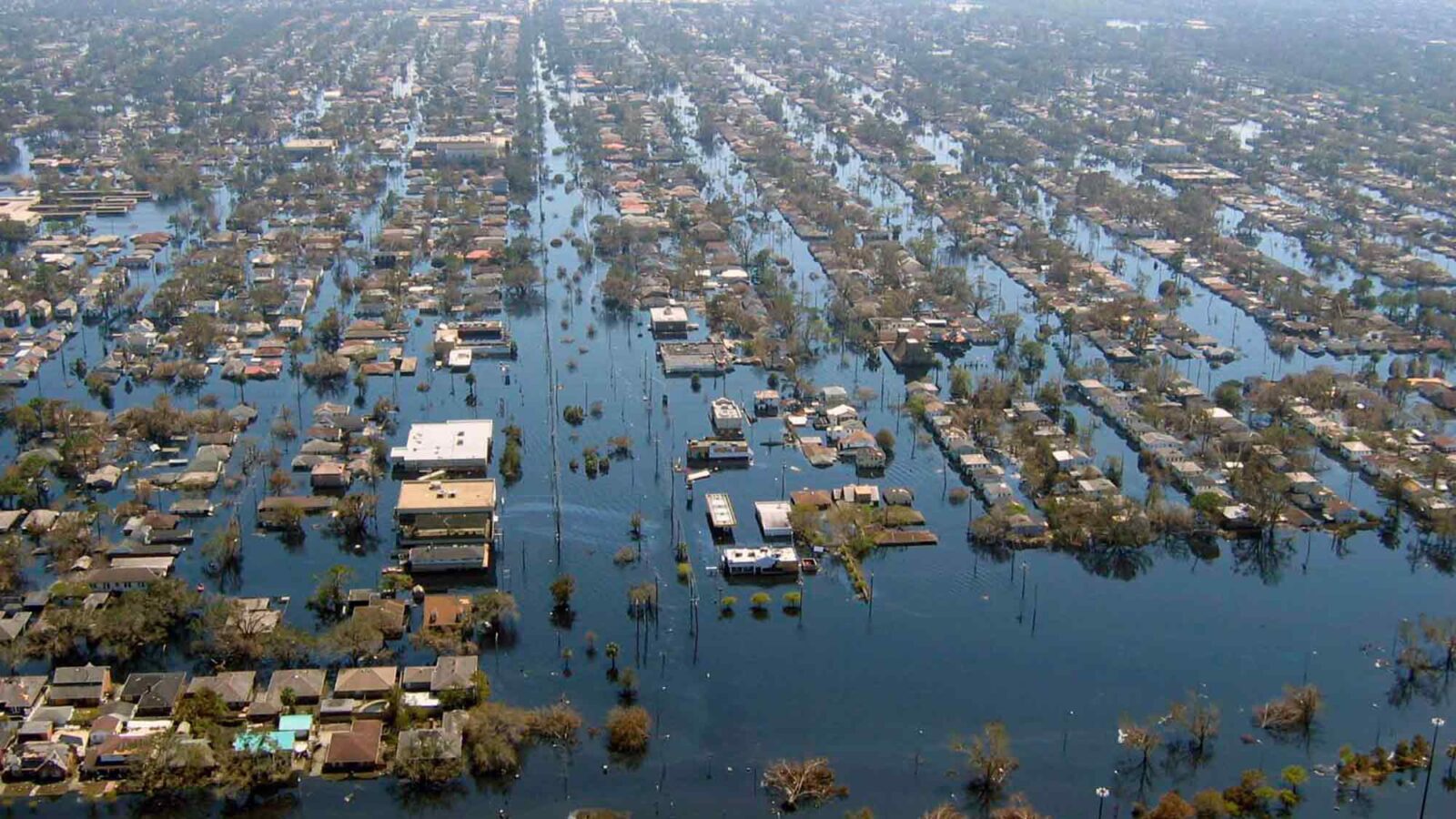
Climate experts are sounding the loudest alarm yet. New Orleans flooding risks have reached what scientists now call a “point of no return.” Multiple new studies published in 2026 paint a sobering picture of the city’s future. Therefore, residents, policymakers, and city planners can no longer afford to treat this as a distant threat. The danger is here — and it is accelerating.
What the Latest Science Says
Nearly the Entire City Is at Risk
A new study reveals that approximately 99% of New Orleans’ population faces flood risk. Researchers note this does not mean every resident will be affected in the next storm. However, depending on a storm’s path and rainfall pattern, nearly all 380,000 residents could be in danger. Houston Public Media
Climate scientist Wanyun Shao of the University of Alabama, a co-author of the study, described the figures as “shocking” and “alarming.” She warned that when the next major hurricane strikes, vulnerable populations — including the poor, the elderly, and children — will suffer most. Houston Public Media
A City Already Below Sea Level
New Orleans sits in an extraordinarily precarious position. The city rests an average of six feet below sea level. Its location on the Mississippi River near the Gulf of Mexico was historically wetland. When those swamps were drained, the land began to sink — a process called subsidence. ClimateCheck
Meanwhile, rising seas continue to eat away at the surrounding landscape. The combination of sinking land and rising water creates a compounding threat that engineers and scientists struggle to counter.
New Studies Deliver Stark Warnings
Published in Science Advances: April 2026
A study published in the journal Science Advances on April 22, 2026 ranked New Orleans among the highest flood-risk cities in the United States. While New York City has a larger number of people at risk in raw numbers, New Orleans far exceeds it in percentage terms. More than 98% of New Orleans residents face flood exposure. Scientific American
The researchers noted that the sheer scale of vulnerability demands urgent policy action, not just awareness.
Published in Nature Sustainability: May 2026
A second study, published in the journal Nature Sustainability, states that New Orleans has reached a “point of no return” on future flood risks. Ongoing sea-level rise and the rapid erosion of wetlands in southern Louisiana are reshaping the region at a dangerous pace. Researchers estimate the city may be surrounded by the Gulf of Mexico before the end of this century. Planetizen
The study also connected worsening storm risk and rising water levels to long-term economic instability, warning that residents may eventually face hard choices about whether parts of the city remain viable at all. PJ Media
Expert Voices: “New Orleans Is Gone”
The language coming from climate scientists is unusually direct. Jesse Keenan, a climate adaptation expert at Tulane University and a co-author of the Nature Sustainability paper, stated bluntly: “In paleo-climate terms, New Orleans is gone; the question is how long it has.” He added that the timeframe for planning a managed retreat is “most likely decades rather than centuries.” Bulletin of the Atomic Scientists
Keenan also warned that even halting climate change today would not save the city: “Even if you stopped climate change today, New Orleans’s days are still numbered.” Bulletin of the Atomic Scientists
These are not fringe voices. They are researchers at leading universities, publishing in peer-reviewed journals. Therefore, their warnings carry significant scientific weight.
The Threats Driving New Orleans Flooding Risks
Several overlapping factors drive the city’s extreme vulnerability. Together, they create a risk profile unlike almost any other city in the world.
1. Sea Level Rise
Global sea levels are rising due to melting ice sheets and warming oceans. Climate change is increasing both coastal and inland flooding through sea level rise and more extreme rainfall events. For New Orleans, even a modest rise in sea level dramatically increases the chance of catastrophic flooding. ClimateCheck
2. Land Subsidence
The ground beneath New Orleans is sinking. Decades of draining wetlands, extracting groundwater, and urban development have accelerated this process. As the land drops and the sea rises, the gap between safety and disaster narrows year by year.
3. Wetland Erosion
Louisiana’s coastal wetlands once acted as a natural buffer against storms. However, those wetlands are disappearing rapidly. Scientists recommend preserving natural landscapes such as wetlands and estuaries, which can act as a natural sponge to absorb floodwaters. Unfortunately, much of that natural protection is already gone. Scientific American
4. Stronger Hurricanes
Warmer Gulf waters fuel more intense hurricanes. New Orleans faces growing threats from sea level rise, stronger hurricanes, and the continued subsidence of the coastline. Together, these factors increase both the frequency and severity of flood events. Planetizen
5. Aging Infrastructure
New Orleans has made improvements to its levee system, floodwalls, and drainage capacity. However, these defenses may not be enough to keep pace with the worsening conditions expected over the coming decades. Furthermore, upgrades are expensive, and funding remains a persistent challenge. The Weather Channel
The Legacy of Hurricane Katrina
Impact Hurricane Katrina
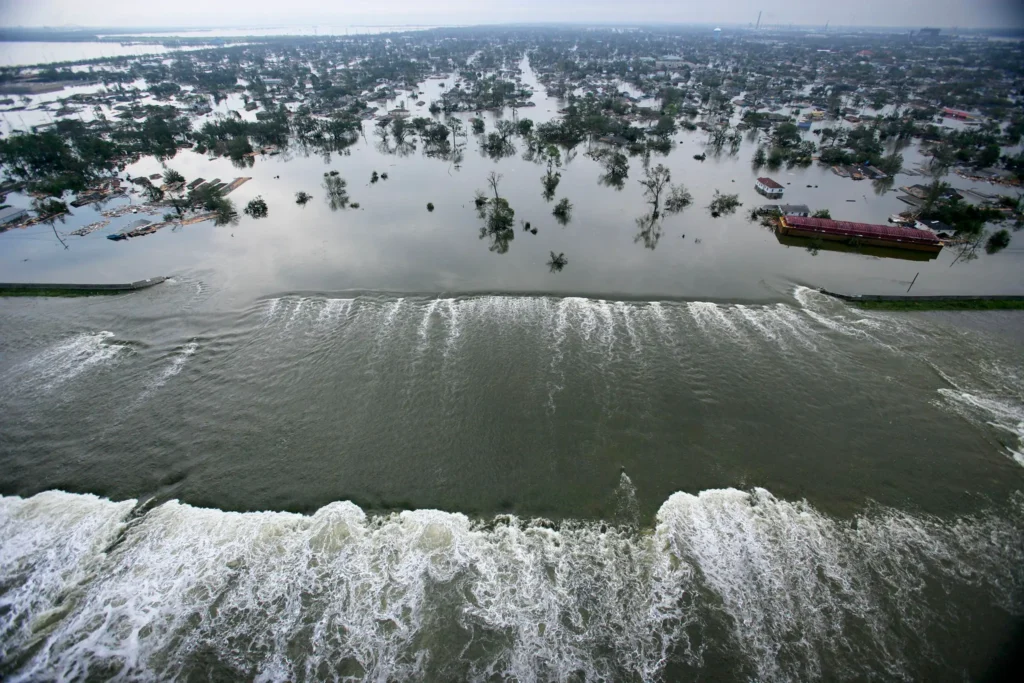
No discussion of New Orleans flooding risks is complete without acknowledging Hurricane Katrina. Katrina resulted in the deaths of more than 1,800 people. It was the costliest hurricane in U.S. history and destroyed more than 800,000 housing units. The storm surge overwhelmed the levee system, causing rapidly rising and deadly floodwaters. ClimateCheck
In the years since Katrina, billions of dollars have been spent to fortify New Orleans with a vast network of levees, floodgates, and pumps. However, researchers now warn that even these defenses will not be enough in the long run. Bulletin of the Atomic Scientists
The city rebuilt. Yet the underlying risks only grew larger.
What Experts Recommend
Scientists and urban planners have put forward a range of strategies. However, most agree there is no single fix. Instead, they call for a layered, long-term approach.
Recommended mitigation strategies include:
- Restoring coastal wetlands to rebuild the city’s natural storm buffers
- Upgrading levees and floodgates to handle stronger future storms
- Replacing impermeable surfaces such as concrete with materials that absorb rainwater
- Elevating buildings above projected flood levels for extreme storm events
- Implementing managed retreat in the most vulnerable low-lying neighborhoods
- Investing in early warning systems so residents can evacuate quickly and safely
- Reforming flood insurance to reflect actual risk levels and discourage high-risk development
New Orleans has already implemented a sustainable integrated water management strategy and is working to elevate buildings above flood levels for a 500-year storm event. Nevertheless, experts warn these steps may not be sufficient given the pace of climate change. ClimateCheck
Who Is Most Vulnerable?
Not all New Orleans residents face equal risk. Socioeconomic status plays a major role in flood vulnerability. Researchers specifically flagged the poor, the elderly, children, and those with less access to education and resources as the most at-risk groups when the next major storm hits. Houston Public Media
Lower-income neighborhoods often sit in the deepest parts of the city. They receive less investment in flood protection. Moreover, their residents have fewer resources to evacuate, rebuild, or relocate after a disaster.
Therefore, any serious response to New Orleans flooding risks must also address inequality. Climate risk and social vulnerability are inseparable in this city.
The Question of Long-Term Viability
Perhaps the most difficult conversation is the one about whether parts of New Orleans can remain inhabited long-term. Scientists warn that vulnerable coastal communities should consider managed retreat before a powerful storm forces their hand. The Weather Channel
This is not a comfortable topic for a city with deep cultural roots, a rich history, and a fiercely loyal population. However, researchers argue the conversation must happen now — while there is still time to plan responsibly.
Researchers connected the ongoing flood threat to long-term economic instability, warning that repeated flooding, rising insurance costs, and infrastructure strain could reshape the city in the coming decades. PJ Media
The Broader Context: A National Warning
New Orleans is not alone. However, its situation is the most extreme. The April 2026 Science Advances study identified numerous cities along the Gulf and Atlantic coasts facing high flood risk. Constructing protective structures such as levees and dikes, as well as preserving natural landscapes, can reduce risk — but challenges to mitigation remain significant. Scientific American
New Orleans simply sits at the sharpest end of a crisis that threatens millions of Americans from Texas to Maine. Therefore, what happens in New Orleans serves as a warning signal for the entire country.
Conclusion
New Orleans flooding risks are no longer a future scenario. They are an accelerating present reality. Multiple peer-reviewed studies published in 2026 confirm that the city faces one of the most severe flood vulnerability profiles of any urban area in the United States.
Climate change is driving sea level rise, intensifying storms, and eroding the wetlands that once protected the city. Meanwhile, the ground beneath New Orleans continues to sink.
Experts are clear: the window for meaningful action is narrow. Therefore, city leaders, federal agencies, and residents must make difficult decisions — about infrastructure, investment, and ultimately, about where and how people can safely live in an era of accelerating climate change.
The story of New Orleans is a warning to every coastal city in America. The question is whether the nation is listening.
Follow our climate and environment section for ongoing coverage of coastal flooding, extreme weather, and climate adaptation across the United States.