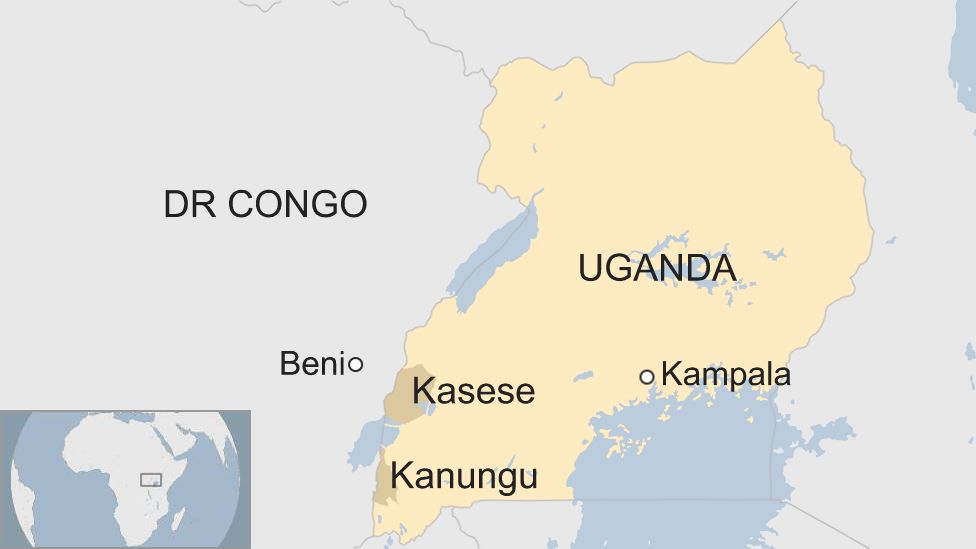
Uganda has made a bold and urgent move. On Wednesday, May 27, 2026, the country ordered a Uganda Ebola border closure with the Democratic Republic of Congo (DRC). The decision takes immediate effect. Authorities aim to stop the spread of a deadly and rare strain of the Ebola virus. The outbreak has already killed hundreds in Congo and is now creeping into Uganda.
Why Uganda Closed Its Border With Congo
A local Ebola task force, led by Vice President Jesca Alupo, made the decision. The task force acted after a rise in Ugandan health workers being exposed to the virus by Congolese patients who crossed the border before the outbreak was officially declared on May 15. CBC NewsWashington Times
Senior health official Dr. Diana Atwine announced the closure at a press conference. She confirmed that the border will remain closed for four weeks. However, exceptions exist for Ebola response teams, humanitarian operations, security personnel, and food and cargo transport. U.S. News & World ReportU.S. News & World Report
Additionally, anyone entering from Congo under emergency circumstances will be placed into mandatory isolation for 21 days. CBS News
The Scale of the Outbreak
The numbers are alarming. According to data compiled by the U.S. Centers for Disease Control and Prevention and the WHO, Congo has recorded 121 confirmed Ebola cases and 17 confirmed deaths, with at least 1,077 additional suspected cases and 246 suspected deaths. In Uganda, there are seven confirmed cases, including one death. CBS News
As of May 26, 2026, there are over 1,000 suspected cases of the Bundibugyo virus in the DRC. The epicentre of the outbreak sits in Congo’s Ituri province. AJMC
Furthermore, on May 17, 2026, the WHO declared the outbreak a public health emergency of international concern. This is among the most serious classifications the agency can issue. AJMC
What Is the Bundibugyo Virus?
This outbreak involves a particularly dangerous and rare Ebola strain. Bundibugyo is a rare type of Ebola virus behind this outbreak, and it has no approved medicines or vaccines. PBS
This marks the 17th Ebola outbreak in the DRC. The fatality rate for previous Bundibugyo outbreaks in 2007 and 2012 ranged between approximately 30% and 50%. AJMC
Therefore, treating infected patients remains extremely difficult. The virus spreads through close contact with the bodily fluids of sick or deceased patients. Healthcare workers and family members caring for patients face the highest risk. CBS News
Is a Vaccine Coming?
Scientists are working fast. Several potential vaccines are in development, but preclinical data are limited as they have not been tested on humans. The most promising candidate is loosely based on an approved vaccine for the Zaire strain. However, it will likely take 6 to 9 months before doses are ready for clinical trials. AJMC
Uganda Ebola Border Closure: What the WHO Says
Not everyone agrees with Uganda’s decision. The WHO has discouraged border closures with Congo, while acknowledging that neighbouring countries are at high risk of contagion. U.S. News & World Report
The agency warned that closures “push the movement of people and goods to informal border crossings that are not monitored, thus increasing the chances of the spread of disease.” The Manila Times
Nevertheless, Uganda pushed forward. Officials argue the need to protect their health workers and citizens outweighs the risks of acting against WHO guidance. The country has dealt with Ebola before and understands the cost of delayed action.
Key Facts at a Glance
- Closure duration: Four weeks, effective May 27, 2026
- Exceptions: Ebola response teams, cargo, humanitarian and security operations
- Mandatory isolation: 21 days for any emergency entrants from Congo
- Uganda confirmed cases: 7, with 1 death
- DRC confirmed cases: 121, with over 1,000 suspected cases
- Ebola strain: Bundibugyo — rare, with no approved vaccine or treatment
- WHO status: Public health emergency of international concern (declared May 17, 2026)
A Rare Moment of Recovery Amid the Crisis
Meanwhile, there is a small sign of hope. On Wednesday, Congolese authorities confirmed that the first person to recover from the Bundibugyo virus had been released from a treatment centre in Rwampara, one of the towns in eastern Congo at the heart of the outbreak. U.S. News & World Report
This is a crucial milestone. It shows that survival is possible, even without an approved treatment.
Background: Uganda and Ebola
Uganda is no stranger to Ebola. The country has faced multiple outbreaks over the past two decades. However, the Bundibugyo strain is especially challenging because of the absence of targeted medical tools.
The WHO, in partnership with the Ministries of Health in both the DRC and Uganda, continues to implement public health measures, coordinate outbreak responses, and carry out rigorous surveillance. AJMC
Meanwhile, tracing and isolating contacts remains the primary weapon against spread. Tracing and isolating Ebola contacts is seen as key to stopping the disease, which usually manifests as hemorrhagic fever. CBS News
Conclusion
The Uganda Ebola border closure marks a critical turning point in East Africa’s fight against this deadly outbreak. Uganda is taking no chances. With over 1,000 suspected cases next door and health workers already infected at home, the four-week closure sends a clear message: containment is the priority.
The world is watching closely. As Congo battles on multiple fronts — including insecurity affecting health operations — the coming weeks will determine how far this outbreak spreads. Stay informed, follow official health guidance, and support global efforts to end this crisis.