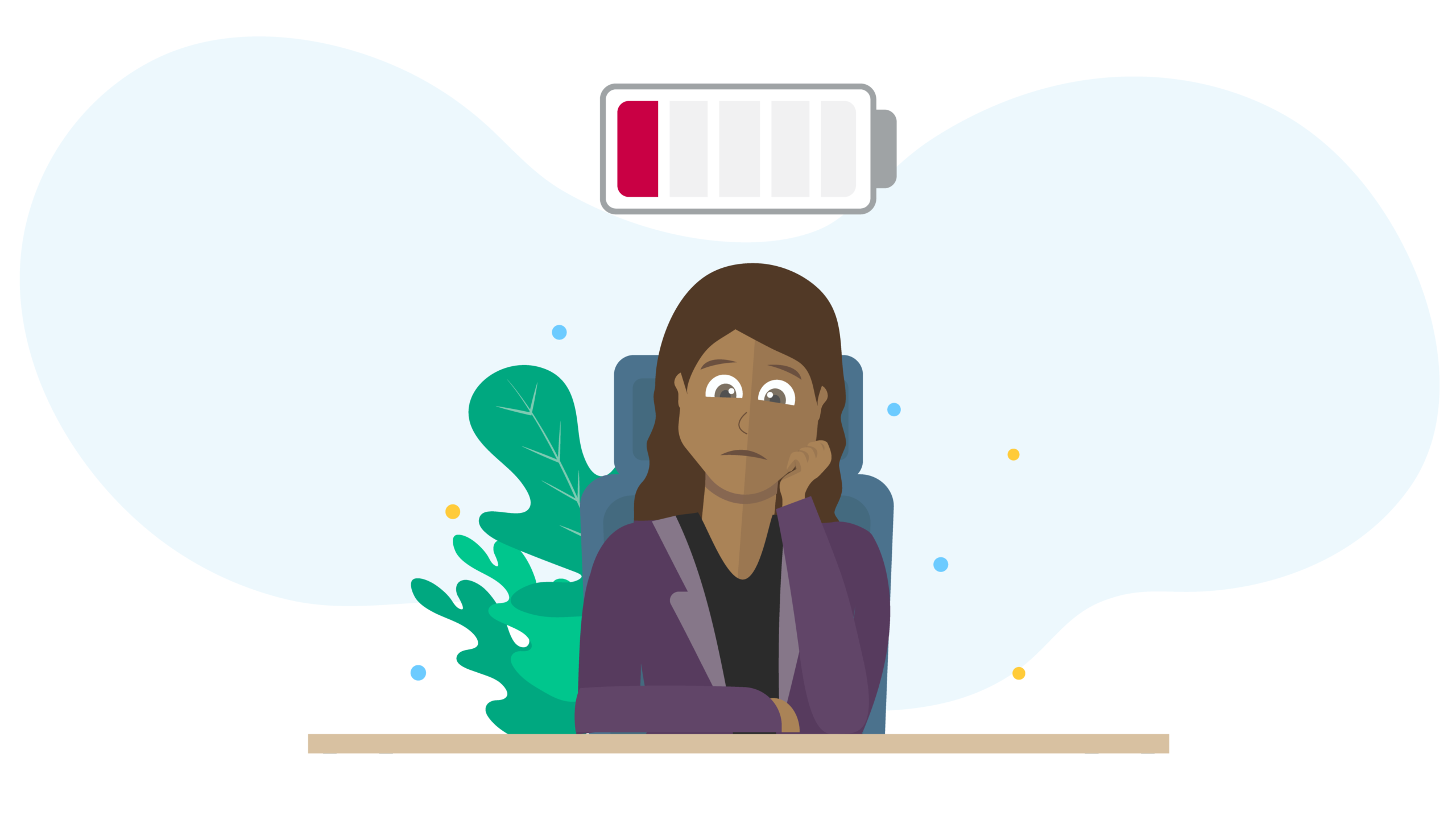
Something is deeply wrong at work. Across industries, age groups, and income levels, Americans are running on empty. Burnout in 2026 has reached a six-year high — and the numbers behind that headline are staggering. More than three in four workers now report some form of burnout. Mental health leaves are surging. And a dangerous new form of exhaustion is quietly spreading through offices, warehouses, and home desks alike. Here is what the data shows, why it is happening, and — most importantly — what actually works to fix it.
The Scale of the Problem: By the Numbers
The burnout crisis in 2026 is not a feeling. It is a documented, measurable emergency.
More than 75% of workers worldwide report experiencing some degree of burnout in 2026. Among knowledge workers specifically, that number climbs to 83%, according to DHR Global’s Workforce Trends Report. Futurecast
The crisis is costing employers an estimated $190 billion in healthcare expenses and $322 billion in lost productivity annually. Yet only one in four workers feel their employer genuinely prioritizes their mental health. Futurecast
In the U.S. specifically, the picture is equally alarming. Aflac’s 15th annual WorkForces Report confirmed that American workforce burnout has reached a six-year high, with nearly three in four — 72% — of U.S. employees facing moderate to very high stress at work. Deloitte Insights
Furthermore, Eagle Hill Consulting’s Workforce Burnout Survey found that more than half — 55% — of U.S. workers report burnout, with heavy workloads cited as the top stress driver by 35% of respondents. Deloitte Insights
Meanwhile, employers are finally starting to feel the operational weight. Nearly two-thirds of HR leaders report an increase in mental health leaves of absence over the past year — with about one in six organizations seeing those leaves spike by 25% or more. International Monetary Fund
The New Face of Burnout: “Silent Burnout”
The most alarming trend in burnout in 2026 is not the workers who crash loudly and dramatically. It is the ones who quietly disappear.
Spring Health’s 2026 Workplace Mental Health Report identifies a rising tide of “silent burnout” — a slow, undetected state of exhaustion where employees maintain the appearance that everything is fine while quietly disengaging. Stanford Institute for Economic Policy Research
HR leaders estimate that 30% of their employees are currently experiencing silent burnout. Meanwhile, 40% of burned-out employees report presenteeism — showing up physically but being mentally checked out at work. Morgan Stanley
Therefore, the real burnout problem is far larger than absence data or resignation rates suggest. Millions of Americans are sitting at their desks — at home or in offices — while contributing far less than they could, and suffering far more than anyone around them knows.
Karishma Patel Buford, Chief People Officer at Spring Health, said: “HR leaders are more invested in mental health than ever — and yet leaves are rising, burnout is spreading quietly, and too many employees still don’t know what support is available to them.” Stanford Institute for Economic Policy Research
Why Burnout in 2026 Is Worse Than Ever Before
The AI Anxiety Effect
One major new driver has emerged that did not exist in previous burnout cycles. 13% of employees now report that worry about how AI will impact their role is directly driving their burnout. Deloitte Insights
That figure will only grow. As AI replaces entry-level roles and reshapes entire job categories, millions of workers face the psychological burden of fearing replacement while being asked to work harder. That combination of overwork and existential career anxiety is a uniquely 2026 phenomenon.
Workloads Are Still Too Heavy
19% of employees are taking on too much work due to labor shortages in their industry. Many companies cut staff aggressively after 2023. However, they did not cut the work itself. Therefore, surviving employees absorbed the extra load — and never put it down. Deloitte Insights
59% of workers say their job negatively impacts their mental health at least monthly. Meanwhile, 70% say they feel pressure to appear “okay” at work even when they are struggling. Congressional Budget Office
Blurred Boundaries Between Work and Life
One in four U.S. employees works outside their scheduled hours “most of the time” or “every day.” A further 63% work outside scheduled hours “sometimes.” Deloitte Insights
Remote and hybrid work eliminated the commute — but it also eliminated the physical boundary between work and personal life. For millions of Americans, the workday never truly ends. Phones buzz at dinner. Emails arrive at midnight. The result is a workforce that never fully recovers.
Younger Workers Are Burning Out Fastest
Burnout is hitting younger workers hardest, with 74% of Gen Z employees reporting moderate to severe burnout. Nearly 40% of 18-to-24-year-olds have taken time off for stress-related mental health issues. Futurecast
Gen Z entered the workforce during a pandemic, navigated remote work from studio apartments, and now faces a job market shaped by AI disruption and economic uncertainty. Additionally, employees under age 35 are 68% more likely to be burned out than workers 55 and older. The burnout pipeline, therefore, is pointed directly at the next generation of American workers. Money
The “Silent Killer”: Sleep Deprivation
Sleep issues are the number one mental health challenge among employees, affecting 36% of workers. However, only 21% of HR leaders recognize it as a top concern — creating a 15-point perception gap that delays intervention and compounds downstream risk. International Monetary Fund
Poor sleep accelerates every other burnout symptom. It impairs judgment, kills motivation, destroys focus, and raises emotional reactivity. Therefore, the burnout epidemic and the sleep crisis are not separate problems. They are the same problem feeding itself.
Who Is Being Hit the Hardest

Burnout
Burnout in 2026 does not hit every worker equally. Here is who faces the greatest risk:
- Gen Z workers (18–34): 68% more likely to burn out than older colleagues
- Women in the workforce: 8 percentage points more likely than men to report feeling in crisis, according to Lyra Health
- Knowledge workers: 83% report experiencing some degree of burnout
- Remote workers: Lack of physical separation makes full recovery difficult
- Employees at companies with poor AI communication: Fear of replacement accelerates stress
- Workers in finance: 86% of finance organizations saw increased demand for mental health support
- Small company employees: 64% feel guilty taking annual leave, making recovery even harder
The Economic Cost Nobody Is Talking About
Burnout is not just a human crisis. It is a financial one — and it is growing fast.
Burnout-related productivity losses and turnover cost organizations $322 billion annually. Furthermore, absenteeism rates are three times higher in employees with mental health conditions than those with physical health conditions. Congressional Budget OfficeCongressional Budget Office
Meanwhile, the healthcare cost spiral continues. The medical cost trend is expected to reach 8.5% in 2026, while prescription drug costs keep climbing. More than half of employees say they are living with chronic conditions, which increase the risk of anxiety, depression, and higher healthcare costs. Congressional Budget Office
Therefore, for every dollar employers save by under-investing in mental health, they spend several more on turnover, absenteeism, presenteeism, and rising health insurance premiums. The math simply does not work in anyone’s favor.
The Warning Signs You Are Burning Out
Recognizing burnout early is the single most powerful tool for stopping it. Watch for these signals:
- Persistent exhaustion that sleep does not fix
- Emotional detachment from work you used to care about
- Declining performance — missed deadlines, more errors, slower output
- Cynicism or irritability toward colleagues, clients, or management
- Physical symptoms — frequent headaches, stomachaches, or getting sick more often
- Difficulty concentrating or making decisions
- Dread before the workday starts — including Sunday anxiety
- Sleep disruption — trouble falling asleep or waking up exhausted
The World Health Organization officially defines burnout as an occupational phenomenon resulting from persistent workplace stress that has not been successfully managed. It is characterized by low energy, increased mental distance from a job, and reduced professional productivity. Deloitte Insights
If three or more of these signs apply to you right now, you may already be experiencing burnout in 2026 — and waiting will only make it worse.
What Actually Works: Evidence-Based Fixes for Burnout in 2026
For Individual Workers
The most important step is also the most neglected one: treat recovery as a non-negotiable priority.
- Protect your sleep — seven to nine hours is not a luxury; it is the foundation of resilience
- Set hard boundaries on work hours — use “Do Not Disturb” modes after a set time each evening
- Take your vacation days — research consistently shows workers who take full leave are more productive, not less
- Talk to a therapist or counselor — early intervention prevents full burnout far more effectively than crisis care
- Audit your workload — have an honest conversation with your manager about what is sustainable
- Practice micro-recovery — short breaks, brief walks, and proper lunch hours compound into real resilience
- Reduce AI anxiety — focus on learning one or two AI tools in your field to regain a sense of control
For Managers
Companies that build a culture of mental health awareness experience a 20% rise in employee retention. About 52% of employees say they feel more engaged and productive when their organization offers access to counseling or wellness programs. Purdue College of Agriculture
Managers who actively reduce burnout share these practices:
- Hold realistic workload reviews in one-on-ones — ask directly, “What is feeling unsustainable right now?”
- Model boundaries yourself — if managers send emails at 11 p.m., teams feel obligated to respond
- Check in proactively on quiet high performers — silent burnout hides behind good performance
- Advocate for headcount before the team breaks, not after
- Know your company’s mental health benefits and actively tell employees what is available
For Organizations
Mental Health UK calls on employers to move beyond awareness campaigns and invest in structural change: manageable workloads, trained managers who can recognize and respond to distress, genuine flexibility, and mental health support that is accessible and stigma-free. Conference Board
The most effective organizational interventions include:
- Manager mental health training — companies whose HR leaders worry about burnout are twice as likely to offer this
- Flexible work arrangements — consistently ranked among the top protective factors against burnout
- EAP (Employee Assistance Programs) with high awareness — most employees do not know their benefits exist
- Regular pulse surveys to catch burnout before it becomes a leave event
- Meaningful AI transparency — clear communication about how AI will affect roles reduces fear-driven stress dramatically
- Dedicated time off for mental health — separate from sick days, normalized from the top down
The Gap Between What Employers Believe and What Workers Experience
One of the most striking findings of 2026 burnout research is the massive disconnect between employer perception and employee reality.
While 89% of HR leaders believe their mental health benefits provide a competitive advantage, nearly two-thirds report an increase in mental health leaves of absence over the past year. International Monetary Fund
95% of HR and benefits professionals say workplace mental health is “somewhat or very important” to business strategy in 2026. However, only one in four employees feel that support in practice. Morgan Stanley
Therefore, the problem is not primarily awareness or intention. It is execution. Companies are spending money on mental health benefits that workers either do not know about, do not trust, or cannot access when they need them most.
Conclusion
Burnout in 2026 is the defining workforce crisis of our time. It is not a personal weakness. It is a systemic failure — of workloads, boundaries, communication, and leadership — playing out simultaneously across millions of American lives.
The good news is that burnout is not inevitable. It is reversible. Workers who catch the early warning signs and act quickly can recover. Managers who create psychologically safe teams prevent burnout before it starts. And organizations that invest in structural mental health support — not just awareness campaigns — see measurable improvements in retention, productivity, and morale.
However, none of that happens automatically. It requires honesty about the scale of the problem, courage to make real changes, and the understanding that a workforce running on empty cannot build anything worth having. The first step toward fixing burnout in 2026 is simple: take it seriously enough to actually do something about it.
If you are experiencing symptoms of burnout, consider speaking with a licensed therapist or contacting the SAMHSA National Helpline at 1-800-662-4357 for free, confidential support.
Published by US Daily Briefs | usdailybriefs.com | May 16, 2026