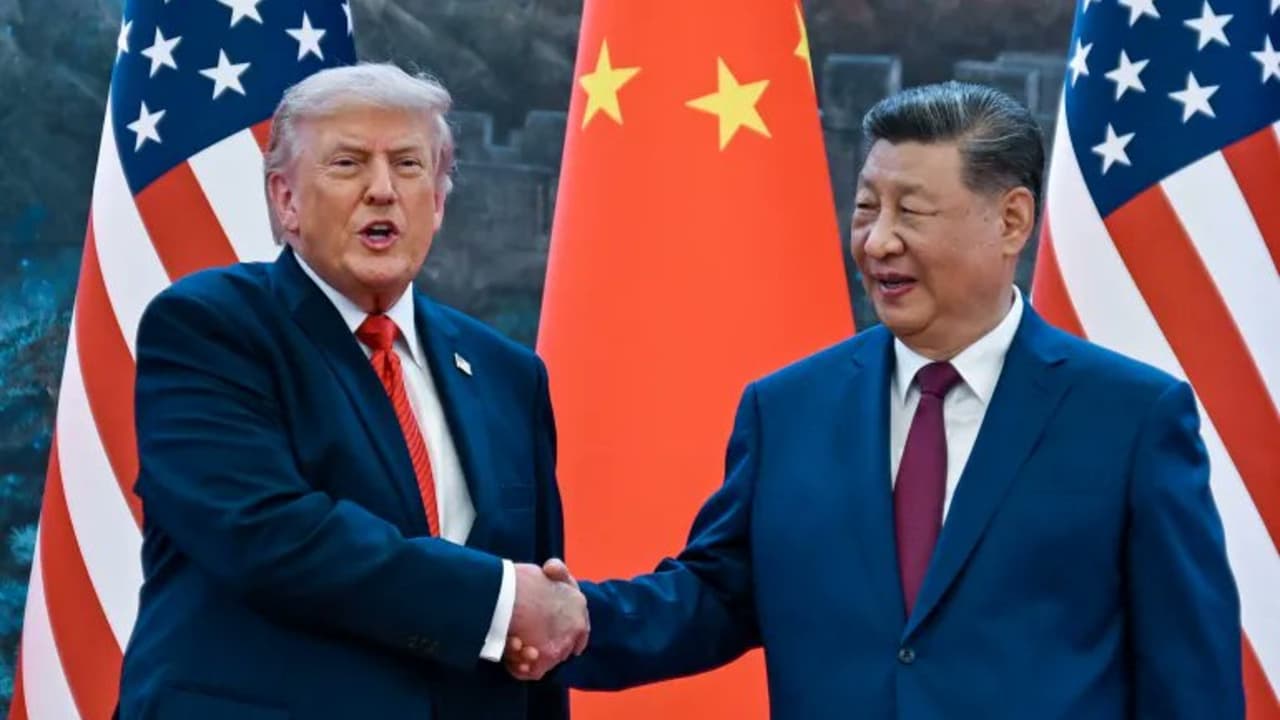
President Donald Trump has left Beijing — and Wall Street is not celebrating. The Trump Xi meeting outcome that markets, farmers, and tech companies were watching closely landed with a thud on Friday. No grand Iran deal. Fewer Boeing jets than promised. Rare earth tensions still unresolved. Taiwan more inflamed than before. However, the two-day summit was not a total failure either. Here is a clear-eyed breakdown of what actually happened in Beijing — and what it means for Americans at home.
What the Summit Produced: The Real Scorecard
Warm Words, Cool Results
The two presidents put on a display of warmth and respect across two days. Trump praised China as a beautiful place and called Xi a great leader. Xi welcomed Trump with military honors, flag-waving children, a gift of rose seeds, and a toast to his health. Fox Business
However, the substance told a different story. From a U.S. perspective, the immediate outcome of the summit was meager: no grand breakthrough, but a mere stabilization of relations and a broad effort to prevent the superpower rivalry from spiraling further out of control. Yahoo Finance
Trump concluded the summit largely where he began — receiving little help from his self-described “friend” Xi Jinping in dealing with the messy war in Iran and a challenging political climate at home. Fox Business
The Strategic Stability Framework
One concrete outcome did emerge. The U.S. and China agreed to forge more cooperative ties and build a “constructive China-U.S. relationship of strategic stability” — a framework Xi said would guide the bilateral relationship for the next three years and beyond. The Payoff Climb
Analyst Jack Lee of the China Macro Group said: “Strategically, Beijing appears to be trying to turn Trump’s transactional willingness to stabilize ties into a longer-term operating framework for U.S.-China relations.” He noted the framework could also become a baseline for the next U.S. president. RSM US
Therefore, Beijing may have gained more from this summit than Washington — securing long-term predictability while giving up relatively little in return.
The Trump Xi Meeting Outcome on Trade: Boeing Falls Short
The 200-Jet Deal
The most headline-grabbing announcement came from Trump himself. Trump told Fox News that China agreed to buy 200 Boeing jets — more than the 150 units Boeing had initially expected. NASFAA
However, the news disappointed more than it excited. That number was less than half the 500 planes many had initially anticipated. Consequently, investors were disappointed, and Boeing shares fell 4% on Wall Street. Yahoo Finance
Meanwhile, context matters here. China’s last major Boeing order came during Trump’s November 2017 trip to Beijing, when China agreed to buy 300 planes. Relations soured after that, and Boeing orders from China dried up entirely. The 200-jet deal breaks that drought, but it sets a lower bar than the 2017 figure. Yahoo Finance
Agriculture and Energy
The two presidents discussed increasing Chinese purchases of U.S. agricultural products, according to the White House readout. Xi also expressed interest in buying more U.S. oil to reduce China’s dependence on the Strait of Hormuz in the future. Polymarket
However, no firm agricultural purchasing numbers were announced. Therefore, American farmers — who were counting on a concrete soybean or beef deal — left the summit still waiting for specifics.
Iran: The Biggest Disappointment of the Summit
No Deal, No Breakthrough
Before the trip, the Iran war was on every expert’s lips as the most urgent issue Trump needed to raise with Xi. The outcome on that front was deeply underwhelming.
While Beijing has repeatedly played up its role as a global mediator, it shied away from committing to making any concrete efforts to end the war. Analysts had said a breakthrough on Iran was unlikely to emerge from the Beijing talks — and they were right. Bloomberg
The two sides did agree on one Iran-adjacent point: both the U.S. and China agreed that the Strait of Hormuz must remain open and free of tolls, according to the White House readout. Polymarket
However, that agreement on principle did not produce a joint action plan. The Strait remains a flashpoint. Gas prices remain elevated. And the Iran war continues to drag on — with no end in sight and China unwilling to use its leverage over Tehran to force a ceasefire.
Why China Won’t Push Iran Harder
Beijing has strategic reasons to stay out. China is Iran’s largest trading partner and top buyer of Iranian oil. Pressuring Tehran on Washington’s behalf would cost China economically and undermine its image as a neutral global mediator. Trump needed China’s help on Iran far more than China needed to give it.
Taiwan: Xi’s Sharpest Warning to America
“Clashes and Even Conflicts”
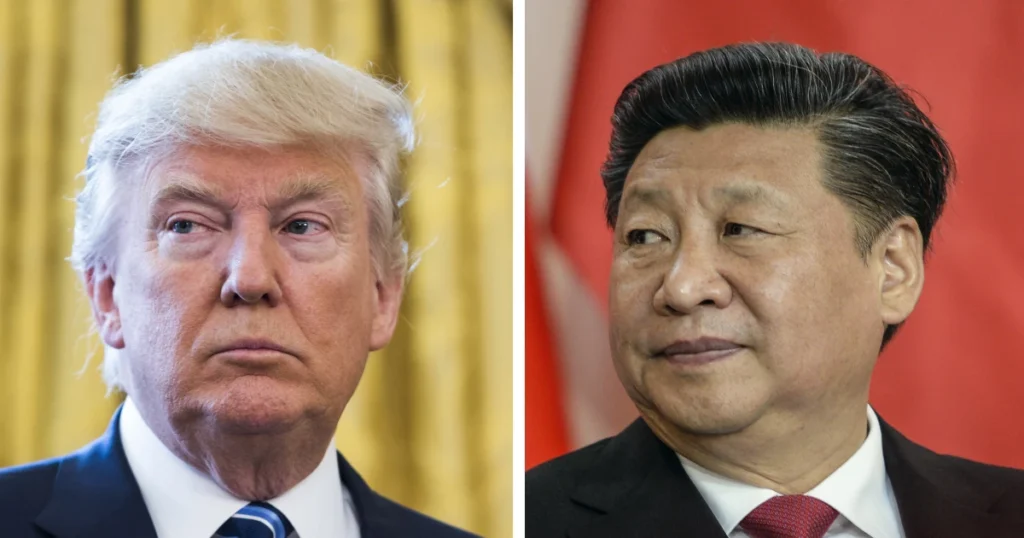
TRUMP AND XI JINPING
The most alarming moment of the summit came early — and it came from Xi. Xi’s warning to Trump that mishandling Taiwan would put the U.S.-China relationship into “great jeopardy” dominated headlines at the start of the talks, according to official English-language Chinese state media. NASFAA
The Chinese issued a formal statement saying Xi “stressed to President Trump that the Taiwan question is the most important issue in China-U.S. relations” and warned that it could lead to “clashes and even conflict” if not handled properly. Polymarket
In a Fox News interview after leaving Beijing, Trump himself acknowledged that Taiwan was “the most important” issue for Xi during their talks. Citizens Bank
The U.S. Response
Secretary of State Marco Rubio moved quickly to calm nerves. Rubio told NBC News: “U.S. policy on the issue of Taiwan is unchanged as of today.” He added that the Chinese “always raise it…we always make clear our position and we move on.” Taiwan’s Foreign Minister Lin Chia-lung publicly thanked Rubio for that statement on Friday. Yahoo Finance
Therefore, the U.S. position on Taiwan did not change in Beijing. However, Xi’s unusually sharp public warning signals that Beijing intends to keep pressing — and that Taiwan’s security will remain a live fault line between the two superpowers.
Tech: Nvidia Gets a Green Light — With Conditions
The H200 Chip Decision
The brightest spot for American tech companies came from a chip deal. Nvidia reportedly received the green light from the U.S. government to sell its H200 chips to major Chinese companies — a decision that sent tech stocks higher. NASFAA
However, the details carry important caveats. Trump’s framework, formalized in a January 2026 Commerce Department regulation, structured access as a revenue-sharing arrangement: approved Chinese firms could purchase H200s provided Nvidia remits 25% of those chip sale revenues to the U.S. government. Money
Furthermore, the H200 is part of Nvidia’s older Hopper architecture, first released in 2022 — not the company’s most advanced chip. Nvidia has since moved to Blackwell-architecture GPUs, meaning the U.S. retains its most capable hardware domestically even under the H200 export framework. Money
Therefore, the Nvidia deal gives China access to capable — but not cutting-edge — AI chips, while generating revenue for the U.S. government. It is a compromise, not a capitulation.
Rare Earths: Still Unresolved
On the critical question of rare earth minerals, the summit produced more fog than light. The technology agreements that matter most to American manufacturers, semiconductor investors, and AI developers remain unresolved, even after Trump’s 36-hour state visit concluded. Money
Beijing was responsible for 59% of the world’s rare earths mining and 91% of its refining in 2024, according to the International Energy Agency. Even under the existing trade truce, China’s export controls on specific heavy rare earths and magnets were not fully reversed. NC State Cooperative Extension
Analyst Crebo-Rediker said: “That puts the U.S. administration on the back foot.” China’s chokehold on these materials remains its single most powerful economic weapon — and Beijing showed no willingness to give it up at the Beijing summit. NC State Cooperative Extension
Who Won the Summit?
Analysts are fairly uniform in their assessment. China holds the upper hand right now. The reality of a complex and challenging relationship caught up with Trump in Beijing — including the fact that China has gained significant leverage over the past year. Yahoo Finance
Scott Kennedy, senior adviser at the Center for Strategic and International Studies, said: “China comes into this meeting far more confident than in 2017, when it feared even a small rise in U.S. tariffs. In the last year, Xi has been able to push back and neutralize much of Trump’s actions.” Polymarket
Meanwhile, Trump is not leaving empty-handed entirely. The visit strengthened a fragile trade truce with Beijing and stabilized the bilateral relationship. The two leaders wrapped up Friday with plans for another meeting this fall. NASFAA
However, stabilization is not the same as winning. Trump arrived in Beijing promising big deals. He left with a Boeing order that disappointed markets, no Iran breakthrough, a sharp Taiwan warning, and a rare earths problem that remains unsolved.
What the Summit Means for Everyday Americans
Here is the honest bottom line for American workers, consumers, and investors:
- Gas prices will stay elevated — no Iran deal means the Strait of Hormuz standoff continues
- Boeing workers get some relief — 200 jet orders is modest but real work for the supply chain
- Farmers are still waiting — no firm agricultural purchase numbers were announced
- Tech investors got a short-term boost — the Nvidia H200 approval lifted stocks
- Supply chains remain vulnerable — rare earth restrictions are still partially in place
- Taiwan risk is unchanged — the U.S. policy holds, but Xi’s warning adds tension
- Trade truce extended — no new tariff escalation is a genuine win for price stability
What Comes Next: Fall Summit on the Calendar
Despite the modest results, the Trump-Xi relationship is not collapsing. Both sides said they would work together to preserve “hard-won positive momentum,” and the leaders agreed to meet again in the fall. The Payoff Climb
Xi framed the strategic stability agreement as a guiding framework for the next three years — a signal that Beijing intends to hold Trump to a more predictable relationship, regardless of what his domestic political pressures demand. RSM US
Therefore, Beijing is playing a long game. It secured a stable framework. It protected its leverage on rare earths. It delivered a firm Taiwan warning. And it did all of this while giving Trump just enough — a Boeing order, warm photo opportunities, a state banquet — to call the trip a success at home.
The next summit this fall will test whether the “strategic stability” framework means anything concrete — or whether it is simply diplomatic language papering over a rivalry that continues to intensify beneath the surface.
Conclusion
The Trump Xi meeting outcome in Beijing produced something real — but far less than the hype suggested. A trade truce was stabilized. A modest Boeing deal was signed. A Nvidia chip framework was confirmed. And a fall meeting was scheduled. However, Iran remains a war without a solution. Rare earths remain a weapon in China’s hand. Taiwan remains more inflamed than before. And markets responded to the results with a collective shrug.
For Americans hoping this summit would bring down gas prices, deliver agricultural relief, or resolve the semiconductor supply chain crisis — the wait continues. The Beijing summit of May 2026 was not a failure. But it was not the breakthrough Trump promised either. It was, above all, a beginning — cautious, managed, and heavily tilted in Beijing’s favor.
This story will be updated as more details from the summit emerge.
Published by US Daily Briefs | usdailybriefs.com | May 15, 2026