
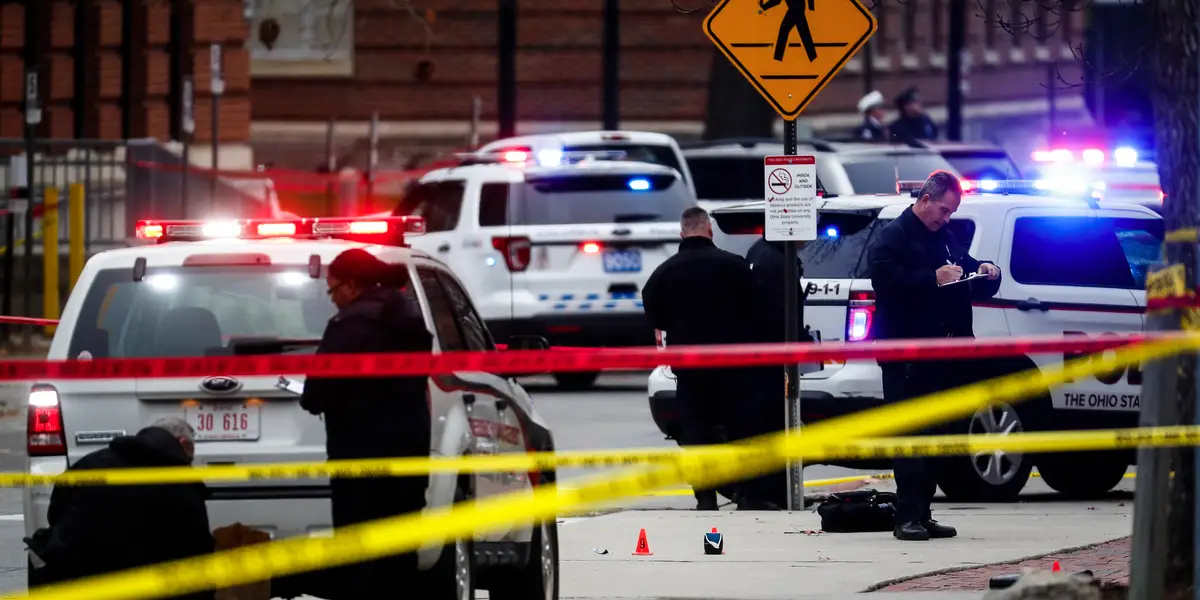
Denver rising homicides are raising alarms across Colorado — and puzzling crime analysts nationwide. Denver has recorded 18 homicides so far in 2026, a 50% increase over the same period last year. Meanwhile, the rest of the country is moving in the opposite direction. A new Major Cities Chiefs Association report found homicides dropped 18% nationwide in early 2026. Therefore, Denver stands out as a troubling exception to an otherwise encouraging national story. MapprCDC
The Numbers: How Bad Is Denver’s Spike?
50% Rise Year-Over-Year
The jump in killings is stark. At the same point in 2025, Denver had recorded 12 homicides. Now the city sits at 18 — six more than this time last year. CDC
The figure remains nearly 20% below the city’s three-year average, Police Chief Ron Thomas said. However, the direction of travel is worrying. The city is moving backward after a historic year of progress. Mappr
April Was Especially Violent
The spike accelerated sharply in April. Police Chief Ron Thomas called April a “violent month,” acknowledging the rise in homicides, but noted that non-fatal shootings have decreased. Colorado Politics
Thomas said at a press conference: “Hopefully we don’t see another month as violent as April,” noting the city recorded seven homicides that month alone. NPR
Furthermore, Thomas said: “In the last probably 10 days, we’ve had six homicides. We’re 50% above where we were this same time last year.” CDC
Denver vs. the Nation: A Stark Contrast
U.S. Cities Are Getting Safer
The broader national picture is encouraging. Violent crime fell sharply across the largest U.S. cities in early 2026, extending a nationwide decline that began after the pandemic-era crime spike. Data from 67 major U.S. law enforcement agencies show violent crime fell across major categories during the first quarter compared with the same period in 2025. CNN
The national numbers paint a striking picture:
- Homicides dropped 17.7% nationally
- Robberies fell 20.4%
- Rapes declined 7.2%
- Aggravated assaults decreased 4.8% CNN
Major Cities Post Dramatic Drops
Several of America’s largest cities are seeing remarkable improvements. Los Angeles posted a 23% homicide decline and Houston recorded a 36.4% drop during the same period. CNN
Meanwhile, Aurora, Colorado — a city that drew national attention during the 2024 election over crime concerns — saw a 66.7% drop in homicides. Therefore, Denver’s spike looks even more jarring against the backdrop of a region largely moving in the right direction. Wikipedia
What Happened? Why Is Denver Bucking the Trend?
A Historic Drop That May Have Set Unrealistic Expectations
Context matters here. Denver came off one of its safest years on record. Denver recorded just 37 homicides in 2025, nearly a 48% drop from 2024 — one of the sharpest declines among major U.S. cities. It was the largest year-over-year drop in homicides in Denver since 1990, and resulted in the city’s lowest recorded homicide total in over a decade. Yahoo!
Denver saw the largest homicide rate decrease of any major U.S. city in 2025, according to a report from the Council on Criminal Justice. The city’s 41% drop ranked first among data collected from 35 American cities. Denver Gazette
Therefore, comparisons to 2025 begin from an unusually low baseline. Even so, the current trend demands serious attention.
The Easter Sunday Shooting Shocked the City
One incident in particular defined April’s deadly run. On Easter Sunday, April 5, a group of people — most members of a single family — gathered for a barbecue at Russell Square Park. Shortly before 6 p.m., a black Jeep Cherokee SRT began circling the park. A confrontation followed between people in the vehicle and people in the park, leading to an exchange of gunfire. 9NEWS
Police said those in the car tried to provoke a confrontation, including by flashing gang signs. One or two people stood and shot from the sunroof of the Jeep as it made high-speed turns around the park. 9NEWS
A family member of the victims said: “Our family is broken right now. We’re confused, we’re angry. They were there on a peaceful adventure, enjoying Easter. And now they’re gone.” 9NEWS
The Loss of License Plate Reader Cameras
Police leadership points to a specific policy change as a complicating factor. Thomas pointed to Denver’s recent decision to end its contract with Flock Safety, a license plate reader camera network, as having complicated investigators’ work. Axios
Denver’s automated license plate reader system had previously proved instrumental in two homicide cases and “numerous nonfatal shootings, armed robberies, and hit-and-run cases,” according to Denver police. Denver7
Therefore, losing that surveillance tool appears to have reduced investigators’ ability to identify suspects quickly. Meanwhile, warmer weather is also bringing more people — and potential conflicts — outdoors.
Mild Weather and Seasonal Patterns
Thomas attributed the surge partly to mild weather and the absence of license plate reader cameras. Axios
Warmer months historically bring more outdoor activity and, unfortunately, more opportunities for violent confrontations. Denver police are acutely aware that summer could intensify the trend. Thomas said: “It certainly makes us worried about the upcoming summer.” CDC
Denver’s Response: What Police Are Doing
Hot Spot Policing Strategy
Denver is not sitting still. Police Chief Ron Thomas and Mayor Mike Johnston have both committed to targeting the neighborhoods where violence clusters most densely.
Thomas said the department’s strategy involves increasing police presence in high-crime neighborhoods. “We have identified a number of persistently violent hot spot locations and have applied specific strategies in those particular neighborhoods to limit the amount of violent crime that has occurred there.” Colorado Politics
This approach — called Place Network Investigations, or PNIs — concentrates police resources and city services on specific, repeatedly violent locations. Mayor Johnston cited the La Alma-Lincoln Park neighborhood as a success story, noting: “This site, where we’re standing, has now gone 452 days since the last shooting.” Yahoo!
Multi-Department Collaboration
The city’s approach goes beyond policing alone. Johnston said addressing violence requires collaboration across city departments — including Denver Parks and Recreation, Economic Development, Excise and Licensing, and the Office of Children’s Affairs. CDC
This multi-agency model reflects a broader understanding of crime prevention. Furthermore, it acknowledges that policing alone cannot address the social conditions that drive violence.
Technology Still Plays a Key Role
Despite losing the Flock Safety camera network, Denver still relies on other surveillance tools. Denver’s Real Time Crime Center pulls together camera feeds, drones, and other surveillance tools to help officers identify suspects and gather evidence. Denver7
Police Chief Thomas also credited faster officer response times and improved medical intervention at shooting scenes as factors in keeping overall fatal shooting numbers lower than they might otherwise be. Denver7
Important Context: The Numbers Are Still Better Than Recent History
2026 Still Ranks Among Denver’s Best Starts in a Decade
Despite the spike, the full picture is more nuanced. Although 2026 has seen 18 homicides — four more than the same period last year — last year marked the lowest homicide count in a decade for that stretch of the calendar. This means 2026 still ranks among the best starts to a year the city has seen in 10 years. Axios
The city’s three-year homicide average is down 28%, per Denver police. Therefore, even amid the current spike, Denver is in a far better position than it was during the peak crime years of 2023 and 2024. CDC
Non-Fatal Shootings Are Actually Declining
One piece of genuinely good news cuts against the headline numbers. Thomas noted that while homicides are rising, non-fatal shootings have decreased. Colorado Politics
The number of fatal shootings has dropped much faster than the number of non-fatal shootings in recent years, partly because officers are applying chest seals, tourniquets, and lifesaving measures before ambulances arrive. Denver7
This suggests Denver’s investment in rapid medical response is saving lives — even as the homicide count climbs again.
The Political Dimension: Crime, Cities, and 2026 Midterms
Denver’s rising homicides arrive at a politically charged moment. The new crime data complicates political narratives heading into the 2026 midterms. President Trump has repeatedly described major Democratic-led cities as gripped by violent crime. However, data show many urban areas have become significantly safer over the last two years, with drops beginning in the second half of the Biden presidency and continuing under Trump. CNN
Denver, led by Democratic Mayor Mike Johnston, represents an inconvenient story for both sides. Its 2025 historic crime drop contradicted the narrative of cities in decline. Its 2026 spike, however, gives critics fresh ammunition.
Nevertheless, analysts caution against drawing sweeping conclusions from a single city’s early-year data. Crime trends are complex, local, and subject to significant fluctuation month to month.
What Experts Say About Crime Trends
Criminologists who study urban violence offer several explanations for why some cities break from national trends.
Key factors that can cause a city to diverge from the national pattern include:
- Local policy changes — such as ending surveillance programs like license plate readers
- Seasonal variation — mild weather earlier in the year can accelerate crime spikes
- Gang and network dynamics — a single active criminal network can dramatically skew numbers
- Baseline effects — a very low starting point makes any increase look more dramatic in percentage terms
- Underfunded community programs — gaps in outreach and mental health services can create conditions for violence
Research shows crime in large metropolitan cities is usually concentrated in certain areas, committed by a small number of individuals, and often involves criminal networks. Therefore, disrupting those networks — rather than simply flooding neighborhoods with police — tends to produce more lasting results. WHO
What Denver Needs to Do Next
Police Chief Thomas and Mayor Johnston have laid out clear goals for 2026. The mayor’s stated aspirations include a 10% decrease in gun-related homicides and a 20% reduction in shootings in “high-risk” areas. NPR
Achieving those targets will require several things to go right simultaneously:
- Restoring or replacing the Flock Safety camera network — or finding equivalent surveillance tools
- Expanding Place Network Investigation sites to more at-risk neighborhoods
- Sustaining multi-department coordination as budget pressures mount
- Accelerating community outreach in areas where trust between residents and police remains low
- Preparing for the summer surge with additional patrols and crisis intervention teams
Meanwhile, the department’s success in reducing non-fatal shootings through faster medical response shows that data-driven tactics can work. The challenge now is extending that success to homicide prevention before summer arrives.
Conclusion
Denver rising homicides present a serious challenge for a city that celebrated extraordinary progress just months ago. Denver has recorded 18 homicides so far in 2026 — a 50% jump from the same period last year. Nevertheless, the numbers remain below the city’s three-year average and still rank among the better starts to a year Denver has seen in over a decade. Mappr
Meanwhile, the rest of the nation continues to report falling violent crime rates. Therefore, Denver’s divergence from the national trend deserves both attention and nuanced analysis. Losing surveillance technology, a brutal April, and the statistical reality of rebounding from a record-low baseline all contribute to the current numbers.
The city has proven it can dramatically reduce homicides. The question now is whether Denver’s leadership can reverse the 2026 trend before summer — historically the most dangerous season — arrives in full force.
Follow our crime and public safety section for the latest updates on Denver homicides, U.S. violent crime trends, and local policing strategies.