
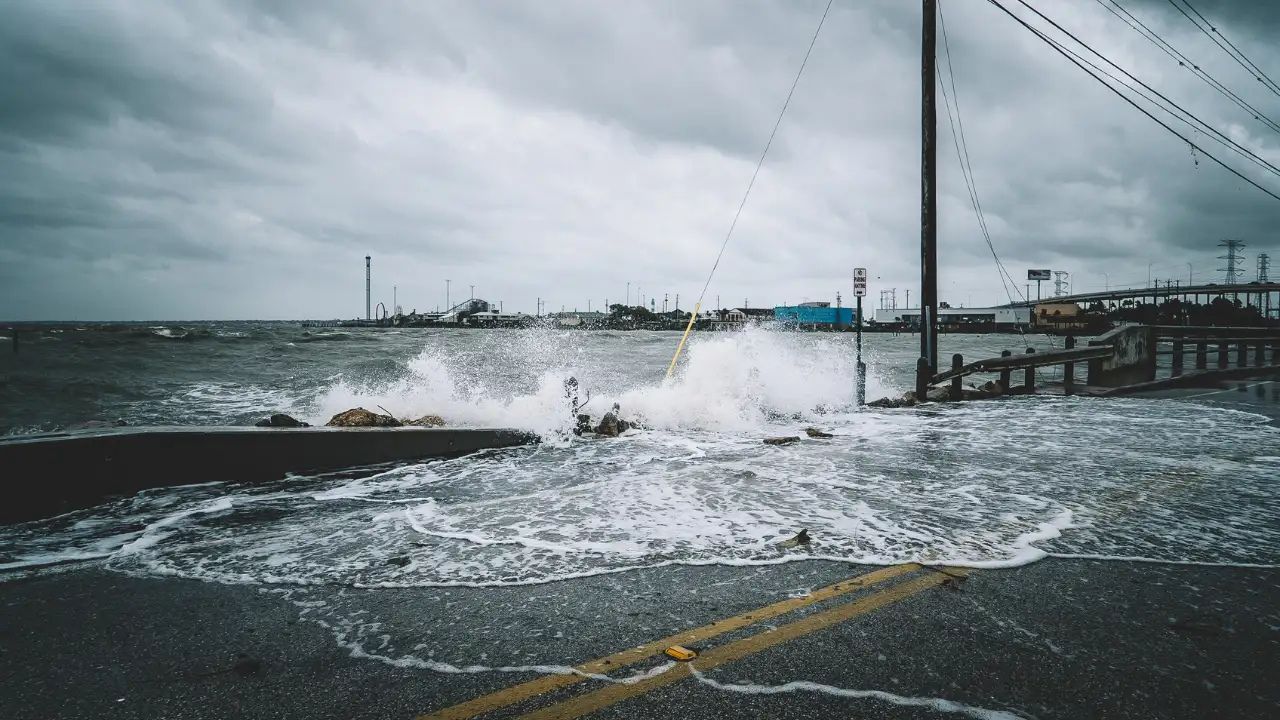
Flash flooding hits New York City — and this time, it hit fast, hard, and without mercy. On the evening of Wednesday, May 20, 2026, a powerful thunderstorm tore through the five boroughs. Severe thunderstorms moved through New York City, bringing heavy rain, gusty winds, and localized flooding. Several parts of the city, particularly in Brooklyn and Queens, exceeded the forecast, with several readings measuring over 2 inches of rain. Streets turned into rivers. Cars disappeared under water. And one woman’s harrowing encounter with floodwaters became the image that defined the storm. CDC
How the Storm Unfolded
Two Inches of Rain in Under an Hour
The storm did not announce itself gradually. Torrential downpours dumped roughly 2 inches of rain in less than an hour, submerging multiple vehicles across parts of Queens and Brooklyn. CNN
Parts of Queens saw over 2.2 inches of rain during the storm, and just under 2 inches fell in Brooklyn. Areas in both boroughs experienced most of that rainfall in just 20 to 40 minutes. CDC
That concentration of rainfall in such a short window made it impossible for the city to respond fast enough. Meanwhile, residents tried desperately to clear street drains — but it was already too late.
The City’s Sewer System Could Not Keep Up
New York City’s aging infrastructure was no match for the storm. NYC officials said the storm brought the equivalent of six inches of water per hour in some areas. The sewer system was built to handle just 1.75 inches per hour. NPR
The city’s sewer system is designed to handle just 1.5 to 1.75 inches of rain per hour. Therefore, the math was brutal. The storm delivered more than three times what the system could absorb. As a result, the excess water had nowhere to go but the streets. CNN
The Viral Moment: Woman Swept Off a Bus
Among all the dramatic footage that emerged, one clip stopped people cold. A woman in a pink shirt was caught on camera being swept backward by a powerful rush of floodwater near a bus stop. She lost her footing in seconds as the water surged around her. Wikipedia
The incident showed the woman getting off a bus into moving water and then losing her balance. The bus could not stop close to the sidewalk because the floodwaters had covered the road. When she tried to get to safety, the strong current knocked her down and pulled her across the flooded street. WHO
The clip went viral almost immediately, drawing reactions that ranged from genuine alarm to dark humor from onlookers who shared and reshared it across social media. No injuries were reported in connection with the incident. Wikipedia
However, the image landed with force. It put a human face on what could otherwise feel like an abstract infrastructure problem.
Roads and Highways Shut Down Across the City
Major Expressways Closed
The flooding brought traffic to a standstill across Brooklyn and Queens. At around 8 p.m., the city sent out a text alert that all lanes of the Van Wyck Expressway were closed in both directions at Jewel Avenue. CNN
The National Weather Service also reported blockages on several roadways, including the Long Island Expressway at 188th Street in both directions. CNN
The Long Island Expressway saw partial shutdowns as floodwater overtook lanes. Drivers across the borough faced impossible choices — turn around or risk getting trapped. Wikipedia
Cars Trapped, Drivers Stranded
On Hempstead Avenue in Queens Village, a bus drove through several inches of water. In Fresh Meadows, one driver said his detour turned into a nightmare. “Ended up in this swimming pool over here, so this is a bad situation,” he said. “I don’t know what is going to happen with my car.” NPR
On Cooper Avenue near 78th Street, police taped off an underpass where two vehicles were trapped under several feet of water. NPR
Furthermore, the Q27 bus had to pause service just before 9 p.m. on Springfield Boulevard near Hollis Avenue in Queens Village, after a manhole cover popped up from the water pressure. CNN
Flash Flooding Hits New York City Subway System Hard
The underground network suffered badly. F train service was suspended as the storm raged, leaving commuters stranded across multiple neighborhoods. abc7ny
At the height of the storm, more than 10,000 people were without power. Meanwhile, subway platforms across multiple lines flooded rapidly, and the MTA scrambled to keep passengers safe. CBC News
The storm hit during evening rush hour. Therefore, tens of thousands of commuters found themselves trapped — either underground, in flooded vehicles, or navigating streets that now resembled canals.
The National Weather Service Responds
The National Weather Service issued warnings covering much of New York City. The NWS issued a flood advisory for Brooklyn, Staten Island, Manhattan, and Queens, due to the boroughs’ low elevation and poor drainage. Mappr
NWS meteorologist Nelson Vaz explained: “These sub-hourly intense rainfall events are challenging to calibrate with ground truth and real-world impacts quickly enough to confidently upgrade to a flash flood warning before the event comes to an end.” CDC
In other words, the storm moved faster than the warning system could track. Therefore, many New Yorkers had little to no time to prepare or seek shelter.
Brooklyn Takes a Major Hit
Brooklyn suffered widespread damage across multiple neighborhoods. A massive fallen tree blocked the intersection at 501 Kings Highway. Video captured flooding in Bayside, Rosedale, and other areas across the borough. Mappr
Streets throughout southern and central Brooklyn filled with water within minutes. Residents filmed knee-deep floodwater pouring through intersections. Trees snapped under the force of gusty winds. Meanwhile, power lines came down in several neighborhoods, knocking out electricity across the borough.
Queens Bears the Worst of the Flooding
Queens took the hardest hit of any borough. Parts of Queens saw over 2.2 inches of rain during the storm — more than any other borough. CDC
Community activist Carl Patterson shared video of flooding in Rosedale, Queens. The footage showed water rushing through residential streets at alarming speed. Flooding was also spotted in Rego Park, on southbound Woodhaven Boulevard next to St. John’s Cemetery. CNN
Furthermore, the borough’s infrastructure struggled to cope. Multiple underpasses flooded completely. Several major roads became impassable. Meanwhile, emergency crews fielded calls across the entire borough simultaneously.
Mayor Mamdani and City Officials Respond
Mayor Visits Affected Residents
New York City Mayor Zohran Mamdani said the storm was so powerful that the rain it dropped overwhelmed the city’s sewer system. He visited Hollis, Queens, where residents had lost a lot in the flooding. NPR
The mayor’s office did not mince words about the city’s accountability. “Every question must be asked and answered so that no New Yorker experiences a tragedy like this again,” the mayor’s office said. City of New York
City officials confirmed they are fully mobilized to support impacted New Yorkers and are working to ensure that every affected household, business, and nonprofit has a clear path to report damage and request help. CDC
Damage Reporting Now Open
The city is actively collecting information from storm-affected residents. Officials urged New Yorkers to prepare for more rainfall over the weekend and to subscribe to Notify NYC to receive the latest emergency alerts. Residents can report damage at the city’s dedicated damage reporting portal. CDC
A Pattern That Cannot Be Ignored
NYC’s Infrastructure Is Not Built for This
This flood was not an isolated event. It reflects a deepening crisis in how New York City handles extreme weather.
The flooding of May 21, 2026, joins a growing list of weather events that are making it harder to pretend the next storm will somehow be different. The infrastructure that failed thousands of New Yorkers will still be there the next time the sky opens up. Wikipedia
Climate scientists and urban planners have warned for years that aging drainage systems in dense cities are no match for increasingly intense rainfall events. The May 2026 storm proved that point once again — painfully.
Basement Apartment Safety Remains a Crisis
The flooding also reignited concerns about basement living in New York City. The intense rain storms put a strain on NYC’s infrastructure, causing deadly flooding and renewed concerns about basement apartments. Spectrum News NY1
Two people died when flash flooding filled basements from Crown Heights, Brooklyn, to Washington Heights in Upper Manhattan during a separate but related severe storm. Flash floods can fill basement spaces in minutes — leaving little or no time to escape. Spectrum News NY1
Therefore, city officials and housing advocates are again calling for stronger protections and clearer evacuation protocols for the tens of thousands of New Yorkers living below street level.
What New Yorkers Should Do Before the Next Storm
The city has issued several reminders for residents. Here is what officials recommend:
- Sign up for Notify NYC — receive real-time emergency weather alerts directly to your phone
- Report storm damage — use the city’s official damage reporting system online
- Never drive through flooded roads — most flood deaths occur in vehicles
- Know your flood risk — check your address against the city’s flood zone maps
- Prepare a go-bag — keep essentials ready in case of rapid evacuation
- Stay off the subway during flash flood warnings — platforms and tracks can flood within minutes
- Clear drains near your home — it helps, but only if done before heavy rain begins
Conclusion
When flash flooding hits New York City, it exposes the same vulnerabilities every time. Aging sewers. Flooded subways. Trapped cars. Overwhelmed emergency services. And New Yorkers caught in the middle with little warning and even less time.
The May 20–21, 2026 storm was not the worst the city has ever seen. However, it was powerful enough to shut down major highways, knock out power for thousands, sweep a woman off a city bus, and flood homes across Brooklyn and Queens.
Mayor Mamdani has pledged accountability and answers. Meanwhile, city engineers face mounting pressure to modernize drainage systems that were never designed for the storms a warming climate now delivers.
The water will drain. The streets will dry. However, the question that every storm raises remains unanswered: when will New York City be ready for what comes next?
Stay informed about New York City weather events, infrastructure updates, and emergency preparedness by following our local news section.