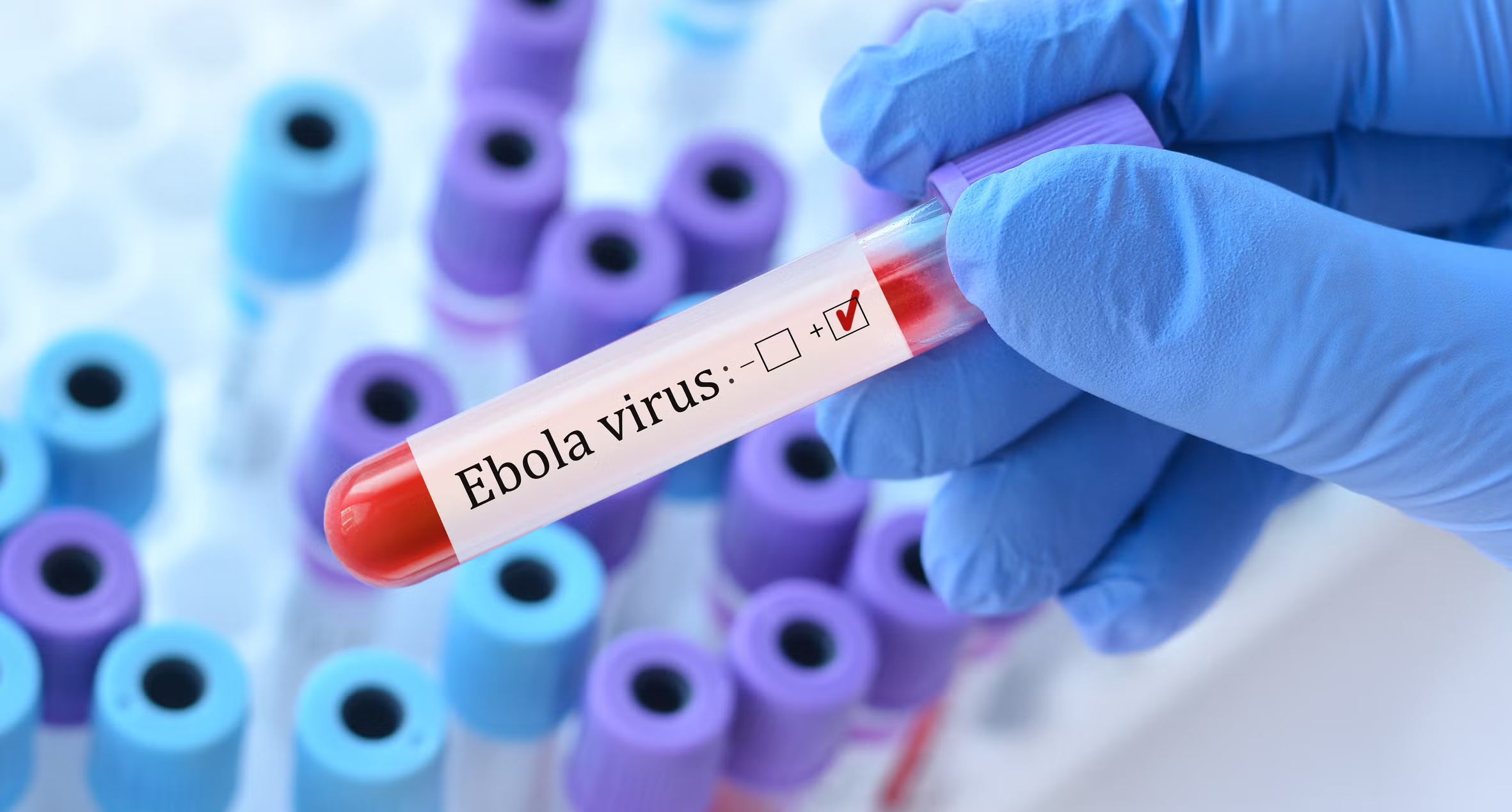
The Ebola outbreak Africa is facing in 2026 is moving fast and growing serious. Health workers in the Democratic Republic of Congo are scrambling to contain an outbreak of Ebola virus, which is suspected to have killed more than 100 people and risks spreading across international borders. Meanwhile, the World Health Organization has declared a global health emergency. Therefore, governments around the world — including the United States — are racing to respond before the virus spreads further. Infection Control Today
What Is Happening Right Now
Cases Surpass 900 in the DRC Alone
The numbers are rising fast. As of May 24, 2026, the DRC reports a total of 904 suspected cases, 101 confirmed cases, 119 suspected deaths, and 10 confirmed deaths. Council on Foreign Relations
A new confirmed case has also emerged in Sud-Kivu Province. Previously, cases had only been confirmed in Ituri and Nord-Kivu provinces. This geographic spread signals that the outbreak is moving beyond its original epicenter. Council on Foreign Relations
Furthermore, the real figures are likely much higher, as the outbreak went undetected for some time before the Congolese government first declared it on May 15. Infection Control Today
Uganda Confirms Cases in Its Capital
The virus has now crossed international borders. Five cases related to the DRC outbreak have been reported in Uganda’s capital city of Kampala. Council on Foreign Relations
Uganda’s health authorities moved quickly after confirming the cases. They activated surveillance measures, screening protocols, and emergency response systems at border crossings and medical facilities.
The Bundibugyo Strain: Why This Outbreak Is Especially Dangerous
The outbreak involves a rare strain of Ebola known as the Bundibugyo virus. The World Health Organization declared it a public health emergency of international concern on May 17. Crucially, there is currently no approved vaccine or specific treatment for this strain. Wikipedia
This distinguishes the 2026 outbreak from previous Ebola emergencies. During the 2014–2016 West Africa epidemic, health workers had access to experimental treatments and eventually a vaccine. This time, they do not.
The incubation period for Ebola ranges from 2 to 21 days. The disease begins with “dry symptoms” — including fever, muscle aches, pain, and fatigue — before progressing to more dangerous “wet symptoms” such as vomiting, diarrhea, and bleeding. CNN
Therefore, infected individuals may travel and unknowingly spread the virus before they show obvious signs of illness.
How the Outbreak Started
The current epicenter is Mongbwalu Health Zone in Ituri Province — a high-traffic mining area in eastern DRC. WHO epidemiologists believe most early cases originated there, then spread to Rwampara and Bunia health zones as people sought medical care, bringing the virus into more populated areas with imperfect infection control. U.S. Department of State
The outbreak is occurring in areas affected by insecurity, population displacement, mining-related population movement, and frequent cross-border travel. All of these factors increase the risk of further transmission. CDC
This is the 17th recorded Ebola outbreak in the DRC since the virus was first identified there in 1976. However, health officials warn this one carries unique risks due to the untreatable strain and the scale of spread. NBC News
10 African Countries Now at Risk
Africa CDC Issues Urgent Warning
The threat extends well beyond the DRC and Uganda. The Africa Centres for Disease Control and Prevention warned on Saturday that 10 African countries are at risk from the worsening outbreak. Africa CDC Director General Jean Kaseya named Angola, Burundi, Central African Republic, the Republic of Congo, Ethiopia, Kenya, Rwanda, South Sudan, Tanzania, and Zambia as facing potential exposure. ABC7
Several of these countries are already responding. Rwanda introduced mandatory Ebola quarantine on May 22. Nigeria launched Ebola surveillance measures on May 24. Ghana issued an Ebola alert on May 19, and Morocco was urged to step up its surveillance protocols. U.S. Department of State
Emergency Funding Urgently Needed
The scale of the response requires significant resources. Africa CDC and the WHO are seeking more than $314 million in emergency funding to fight the outbreak. ABC7
However, global health financing remains stretched. Experts warn that delays in funding could allow the virus to gain a stronger foothold in more countries.
An American Doctor Tests Positive
Peter Stafford Airlifted to Germany
The outbreak has directly affected at least one American. The CDC confirmed that an American doctor working in the DRC — identified as Peter Stafford — tested positive for Ebola and was taken to Germany for treatment. ABC7
Stafford was infected while treating patients at Nyankunde Hospital near Bunia. Six other high-risk contacts also traveled to Germany and the Czech Republic for monitoring. U.S. Department of State
A Christian missionary group that Stafford works with reported on Thursday that he was “critically ill but not acutely deteriorating.” His wife, also a doctor, and their four children are asymptomatic and quarantining in Germany as a precaution. ABC7
Furthermore, six other U.S. citizens have also been exposed to the virus. The U.S. government is monitoring all of them closely. ABC7
How the United States Is Responding
Entry Restrictions and Travel Bans
The U.S. government moved swiftly to protect the American public. On May 15, 2026 — within 24 hours of learning of confirmed cases — the Department of State established an interagency coordination cell and incident management system in Washington, D.C. Embassies in the DRC, Rwanda, South Sudan, and Uganda immediately joined this group. Wikipedia
The CDC issued a Title 42 order on May 18, 2026, prohibiting travel to the United States for foreign nationals who have visited the DRC, Uganda, and South Sudan within the last 21 days. Wikipedia
On May 18, the CDC and DHS also announced enhanced travel screening, entry restrictions, and additional public health measures to prevent Ebola from entering the United States. ABC News
Funding Treatment Clinics in Affected Regions
The U.S. is not just closing its borders. It is also sending help to the source. The United States announced a broad commitment to funding up to 50 treatment clinics and covering associated frontline costs in Ebola-affected regions of the DRC and Uganda. IQAir
The CDC is deploying resources from its existing in-country offices to support surveillance, contact tracing, and laboratory testing. The agency is also mobilizing additional support from its headquarters in Atlanta. NBC Los Angeles
What the U.S. Government Is Telling Americans
Here is what U.S. officials have communicated to the public so far:
- Travel Level 3 Notice issued for the DRC — advising Americans not to travel there
- Travel Level 1 Notice issued for Uganda — urging heightened caution
- Title 42 restrictions block entry of foreign nationals from DRC, Uganda, and South Sudan
- No U.S. cases reported on American soil as of May 24, 2026
- Risk to U.S. general public remains low, according to the CDC
To date, no Ebola cases associated with this outbreak have been reported in the United States, and the risk to the general public remains low. ABC News
Why Global Health Experts Are Alarmed
Conflict Zones and Limited Health Infrastructure
Containing an Ebola outbreak anywhere is difficult. Containing one in an active conflict zone is even harder. The eastern DRC has faced armed conflict for decades. Health facilities are underfunded, understaffed, and sometimes unsafe for workers.
Ebola is significantly less transmissible than many airborne viruses. However, the absence of a vaccine or specific treatment for the Bundibugyo strain creates serious complications for the response. Wikipedia
CDC and USAID Staffing Cuts Raise Concerns
The outbreak comes at a difficult time for U.S. global health infrastructure. Experts warn of concerns over weakened public health infrastructure, CDC staffing cuts, and reduced USAID funding — all of which could hamper the international response. CNN
Many global health specialists argue that investing in outbreak response early is far cheaper than managing a widespread epidemic later. Nevertheless, funding and staffing gaps remain a serious obstacle.
What Ebola Does to the Body
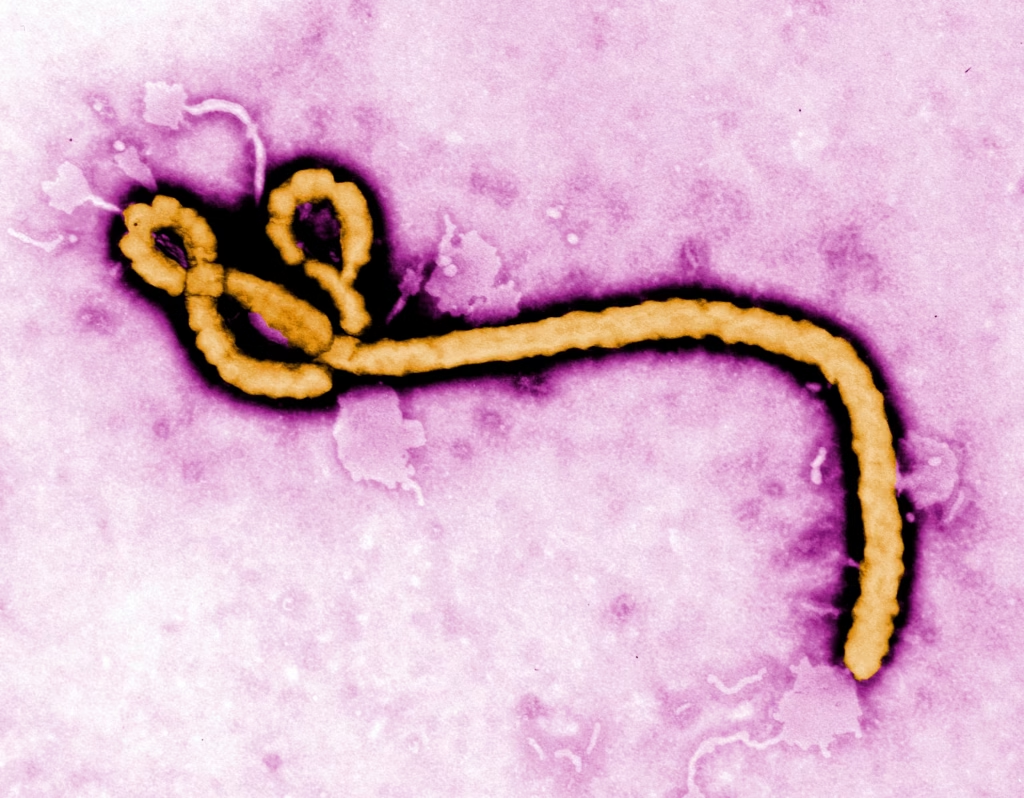
Ebola Virus
For readers unfamiliar with Ebola, it is important to understand how the virus spreads and progresses.
Ebola does not spread through the air, water, or casual contact. However, it spreads rapidly through direct contact with the bodily fluids of an infected person. This makes healthcare workers especially vulnerable.
Key facts about how Ebola spreads:
- Contact with blood or bodily fluids of an infected person
- Contaminated needles or medical equipment
- Unsafe burial practices — handling of deceased bodies poses a high risk
- Contact with infected animals, such as fruit bats or non-human primates
Therefore, healthcare workers, family caregivers, and funeral workers face the greatest risk.
The Deadliest Ebola Outbreak in History — And What We Learned
The last major Ebola epidemic — the largest and deadliest in history — swept through West Africa from 2014 to 2016, killing more than eleven thousand people and infecting nearly thirty thousand others, with most cases concentrated in Guinea, Liberia, and Sierra Leone. Wikipedia
That outbreak revealed devastating gaps in global health preparedness. It also led to significant investments in Ebola vaccine development, contact tracing infrastructure, and international emergency response coordination.
However, the 2026 outbreak involves a different strain. Many of those investments do not directly apply. Therefore, health officials are essentially building a response from scratch in one of the world’s most challenging environments.
WHO’s Emergency Declaration: What It Means
The WHO declared this outbreak a Public Health Emergency of International Concern — known as a PHEIC — on May 17, 2026. This is the highest level of alert the WHO can issue.
The WHO directed all member states newly detecting a suspected or confirmed Bundibugyo virus case to treat it as a health emergency and take immediate steps within 24 hours. Required actions include case isolation, case management, establishing a definitive diagnosis, and undertaking contact tracing and monitoring. ifrc
A PHEIC designation also unlocks faster international funding, triggers coordinated global response protocols, and compels governments to report cases more transparently.
Conclusion
The Ebola outbreak Africa is facing in 2026 represents one of the most serious global health crises in years. Cases have surpassed 900 in the DRC alone, with real numbers likely even higher. The Bundibugyo strain has no approved vaccine or treatment. Furthermore, 10 countries across Africa now face potential exposure. Infection Control Today
The United States has responded with travel restrictions, emergency clinic funding, and enhanced CDC deployment. However, experts warn that the combination of armed conflict, limited health infrastructure, and reduced U.S. global health staffing creates a challenging environment.
Meanwhile, the world watches closely. The next few weeks will be critical. Swift action, adequate funding, and strong international coordination offer the best hope of containing this fast-moving outbreak before it spreads further.
Follow our global health section for the latest updates on the 2026 Ebola outbreak, CDC travel advisories, and international response efforts.