
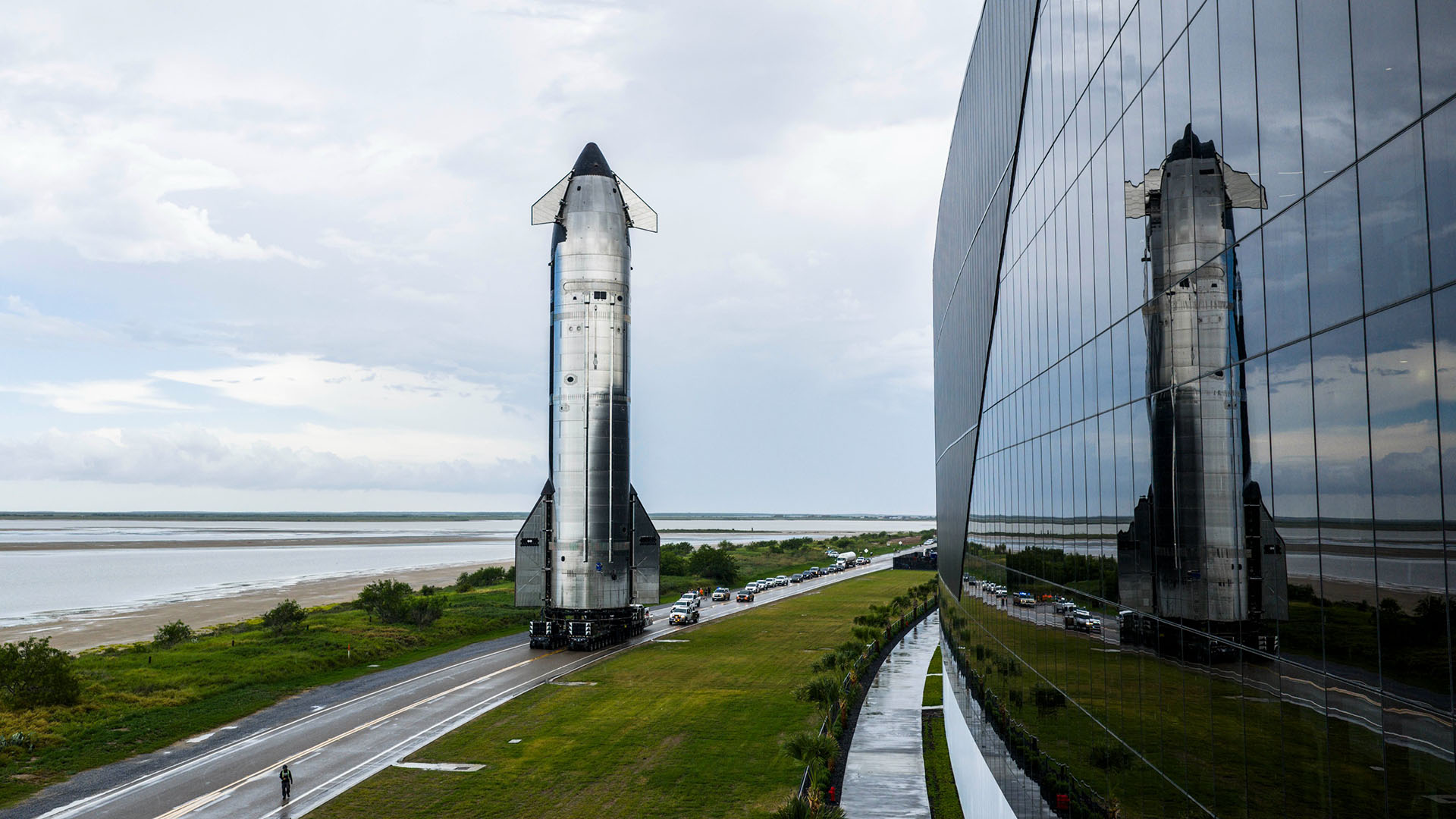
The SpaceX Starship debut flight of its most powerful rocket yet made history on Friday, May 22, 2026. SpaceX’s Starship V3 completed its first test flight, reaching space despite one Raptor vacuum engine shutting down early on Flight 12. The mission marked the 12th overall test flight of Starship. Meanwhile, it introduced a new generation of the world’s most powerful rocket — and carried enormous stakes for NASA, SpaceX’s upcoming IPO, and humanity’s ambitions on the moon and Mars. Space.com
The Launch: A Long Time Coming
Months of Delays Finally End
This flight did not happen easily. SpaceX delayed it multiple times throughout 2026. The delay marked the third time that Starship’s 12th overall test flight had slipped in 2026. SpaceX first targeted a March liftoff, then pushed to April, and finally settled on May. Wikipedia
Even on launch week, the mission faced one more setback. A first attempt was scrubbed on May 21 due to a hydraulic pin issue on the tower arm. However, SpaceX tried again the following evening and succeeded. WHO
Starship lifted off at 22:30:24 GMT on Friday, May 22, 2026, from Starbase, Texas. The wait was over. aol
First Launch From Brand-New Pad 2
This flight carried another milestone beyond just the new rocket version. Flight 12 was not only the first flight of Starship Version 3 but also the first launch from Starbase’s second launch pad. aol
Therefore, SpaceX broke in two new systems simultaneously — a bold move that reflects the company’s aggressive testing philosophy.
What Is Starship V3? A Major Upgrade
More Power, Fewer Parts
Starship Version 3 represents a generational leap over its predecessor. Starship V3 stands 408 feet tall when fully stacked and features new engines that give it 18 million pounds of thrust. aol
According to SpaceX’s IPO prospectus, V3 is designed to deliver 100 metric tons to Earth’s orbit in a fully reusable configuration while enabling rapid turnaround times similar to commercial aviation. aol
Key upgrades include a reduction to only three larger and stronger grid fins on the booster, an integrated hot-staging design that removes the expendable interstage, and significantly simplified aft sections on both the booster and ship. Starship V3 also features increased propellant capacity and new hardware to support future orbital refueling. CNN
The Raptor 3 Engine
The most significant upgrade is the new Raptor 3 engine. Each unit targets 300 tons of thrust at liftoff. With 33 of them on the Super Heavy booster, the combined output exceeds 18 million pounds of thrust. aol
According to SpaceX, V3 incorporates thousands of changes from its predecessor, touching virtually every major system on both the booster and the ship. Therefore, this was not a minor refresh. It was a near-total rebuild. aol
What Happened During the SpaceX Starship Debut Flight
The Good: Ship Reaches Space
Despite some problems, the mission achieved its core objectives. Early results showed a successful liftoff, hot staging, payload release, reentry heating management, and ship splashdown on two engines. WHO
The first Starship V3 — the most powerful rocket configuration ever flown — lifted off from Starbase on May 22, completing the full planned flight profile short of full orbital insertion, which was never a stated objective for this test. Space.com
Post-flight, Elon Musk confirmed that the Starship V3 heat shield held well during Flight 12 — a significant milestone for the vehicle’s thermal protection system. aol
Payload Deployed Successfully
SpaceX also tested its ability to deploy payloads in space. During the flight, the Ship deployed 20 dummy Starlink satellites, and two modified probes that used cameras to beam photos of the Ship back to Earth. NPR
This was a major achievement. Demonstrating reliable payload deployment moves Starship closer to its goal of launching commercial satellites and eventually crewed missions.
The Problems: Engine and Booster Anomalies
The flight was not without issues. Two notable anomalies occurred during the mission.
The most significant technical issue was the premature shutdown of one of three vacuum-optimized Raptor engines aboard the Ship upper stage. With only five of six engines producing thrust, the vehicle’s flight computer autonomously extended the burn durations of the healthy engines — successfully compensating for the deficit and placing Starship on its planned sub-orbital trajectory. Space.com
Meanwhile, the Super Heavy booster ran into its own problems. Super Heavy failed to properly ignite for its boostback burn. It attempted a landing burn downrange but crash-landed in the ocean. aol
The booster experienced a boostback burn anomaly and had several missing engines, causing it to spin out of control. However, the Flight Termination System was intentionally left inactive. WHO
Ship’s Fiery but Controlled Splashdown
The spacecraft plummeted upright into the Indian Ocean under seemingly full control, then toppled over and ignited. While the liftoff itself went well, the spacecraft had to make do with fewer engines — but kept heading eastward 120 miles up. CNN
Therefore, while the ship’s ending was fiery, it performed its mission. SpaceX planned for a water splashdown in the Indian Ocean from the start.
Why SpaceX Called It a Success Anyway
Data Over Perfection
SpaceX’s testing philosophy centers on learning, not flawlessness. SpaceX’s iterative test philosophy — fly, gather data, fix, fly again — means even partial successes are treated as productive data points rather than failures. Space.com
Flight 12 proved V3 can fly, survive reentry, and deploy payloads under engine-out conditions. That is the foundation everything else has to be built on. Polymarket
Furthermore, SpaceX released an official post-flight statement confirming that Super Heavy ignited all 33 Raptor 3 engines and that only a single Raptor shut down during ascent — with the first-stage flight deemed a success. aol
Key Milestones Achieved on Flight 12
Here is a summary of what Flight 12 accomplished:
- ✅ Successful liftoff from new Pad 2
- ✅ All 33 Raptor 3 engines ignited on Super Heavy
- ✅ Hot staging completed successfully
- ✅ Ship reached space (120 miles altitude)
- ✅ 20 dummy Starlink satellites deployed
- ✅ Heat shield performed well during reentry
- ✅ Ship splashed down in Indian Ocean as planned
- ❌ One Raptor vacuum engine shut down early
- ❌ Super Heavy booster boostback burn failed; booster crash-landed in ocean
What This Means for NASA’s Moon Mission
Starship Is NASA’s Lunar Lander
The stakes behind this flight extend far beyond a test. NASA is betting that Starship will serve as the lander to carry its astronauts to the moon on its Artemis IV mission, currently scheduled for early 2028. The mission would mark U.S. astronauts’ first trip back to the moon in more than half a century. aol
However, before Starship HLS can put anyone on the moon, it has to solve a problem no rocket has yet demonstrated at scale — refueling in orbit. This requires approximately ten tanker launches worth of propellant loaded into a depot before the lander has enough fuel to reach the lunar surface. TESLARATI
Therefore, Flight 12 represents a necessary early step — but many more milestones remain before Starship carries humans to the lunar surface.
Racing Against Blue Origin
SpaceX is not the only company competing for NASA’s lunar business. NASA is also paying Jeff Bezos’ Blue Origin to provide a competing lunar lander called Blue Moon. While Starship has reached the fringes of space on multiple flights, Bezos’ Blue Moon has yet to lift off, although a prototype is being readied for a moonshot later this year. Starship SpaceX Wiki
Meanwhile, a moon landing by two astronauts — Artemis IV — could follow as soon as 2028 using either Starship or Blue Moon, whichever lander proves safer and is ready first. Starship SpaceX Wiki
Therefore, SpaceX faces both a technical challenge and a competitive race.
The IPO Connection: Perfect Timing
Flight 12 did not happen in a business vacuum. The timing was deliberate and significant. SpaceX publicly filed its S-1 registration statement with the Securities and Exchange Commission on May 20, 2026 — just two days before the launch — making its financial details available to the public for the first time ahead of what could be the largest IPO in history. NPR
According to the IPO prospectus, SpaceX spent about $3 billion on research and development for Starship in 2025 — when it also logged an overall loss of $4.9 billion. Furthermore, Elon Musk’s rocket maker has spent more than $15 billion on its Starship program in total. CDCaol
With a SpaceX IPO targeting June 2026, the timing of Flight 12’s proof of concept could not have been more useful for investor confidence. Polymarket
The company intends to launch satellites to orbit aboard Starship “in the second half of 2026.” Therefore, turning Starship from a money-losing test vehicle into a revenue-generating launch platform is now an urgent commercial priority. CDC
The Road to Mars
Musk’s Long-Term Vision Remains Intact
Beyond the moon, Elon Musk has a much bigger destination in mind. Musk has long held the goal of colonizing Mars, using the Starship rocket to lift cargo and as many as 100 people at a time into orbit. aol
Flight 12 moves that vision one step forward. However, significant challenges remain before any Mars mission becomes realistic. SpaceX still needs to demonstrate full orbital flight, in-orbit refueling, and reliable booster recovery.
What Comes Next
With 11,979 Starlink satellites launched to date and pressure mounting from commercial and government customers to expand Starship’s payload capacity, the cadence of V3 test flights is expected to accelerate through the second half of 2026. Space.com
Future Starship launches will likely attempt to return both the Super Heavy and Starship upper stage to the two pads at Starbase, where they will be caught by the giant metal arms of SpaceX’s “Mechazilla” pad structure. NPR
Therefore, Flight 13 and beyond will push for full booster catch and eventual orbital insertion — the next critical milestones on the path to the moon and Mars.
A Historic Moment in Space History
The SpaceX Starship debut flight of Version 3 was not perfect. However, it was historic. The world’s most powerful rocket reached space, deployed payloads, survived reentry, and proved it can fly even when engines fail. For a vehicle that has exploded multiple times in previous tests, Flight 12 represented a significant leap forward.
SpaceX was hoping to avoid the fireworks it experienced during back-to-back launches last year when midair explosions rained wreckage down on the Atlantic. There was no fireball this time until the very end. That alone marks meaningful progress. CNN
Meanwhile, with a blockbuster IPO approaching and NASA’s moon deadline looming, SpaceX cannot afford to slow down. The next flight will need to go further — and the pressure to deliver keeps growing.
The stars have never felt closer. However, for SpaceX, the hardest work is still ahead.
Follow our space and technology section for the latest updates on SpaceX Starship test flights, the NASA Artemis program, and the upcoming SpaceX IPO.