Economic storm clouds are gathering over the United States. A growing number of top economists are issuing a recession warning for the US, pointing to slowing growth, cooling consumer spending, and a fragile labor market. However, not everyone agrees a downturn is inevitable. Here is what the data — and the experts — are actually saying right now.
What the Key Economic Numbers Show
GDP Growth Is Slowing
The U.S. economy is still growing, but it is losing steam. GDP growth reached 2% in 2025 despite major policy shifts and a government shutdown, supported by strong productivity. Fox Business
Looking ahead, forecasters are divided. The IMF projects GDP growth to accelerate modestly to 2.4% in 2026. Meanwhile, other institutions are more cautious. The Conference Board revised its US GDP growth forecast down to 1.6% for 2026. Fox BusinessNASFAA
Furthermore, the Indiana Business Research Center forecasts real GDP growth of just 1.8% in 2026, with unemployment rising to 4.8%. That is a significant step down from recent years. Yahoo Finance
The Labor Market Is Weakening
Jobs data tells a worrying story. Average monthly nonfarm payroll gains stood at just 14,000 during the six months to January — far below the average gain of 122,000 recorded in 2024. Bloomberg
However, unemployment has not spiked yet. Employment growth is slowing, but the unemployment rate should remain close to 4% in 2026 and 2027. Fox Business
On wages, there is some good news. Average hourly earnings for all employees rose 3.5% over the year ending in March 2026, and the layoffs rate remains stable and low. NC State Cooperative Extension
What Top Economists Are Warning
Gary Shilling: “Almost Inevitable”
One of Wall Street’s most respected forecasters is ringing the alarm bell loudly. Legendary Merrill Lynch forecaster Gary Shilling warns that a U.S. recession is “almost inevitable” by year-end, driven by a “frozen” housing market, collapsing capital expenditure, and a weakening consumer base. Insurance Journal
Shilling pointed to a sharp slowdown in business investment. Broader capital expenditures grew just 3.9% by the end of 2025, compared with a pandemic peak of 24% capex growth. Insurance Journal
He also raised fears about financial markets. Shilling warned that stocks are “very expensive” and said a market correction of 20% to 30% is “probably in the cards.” Insurance Journal
Moody’s: “Nothing Else Can Go Wrong”
Mark Zandi, chief economist at Moody’s Analytics, said: “I think we’ll most likely get through 2026 without a downturn — but nothing else can go wrong. Like, nothing. We’re pretty much on the edge.” Tcnj
That is hardly a ringing endorsement. Moody’s puts the risk of a 2026 recession at about 42% — nearly three times what it would be in a healthy economy, where Zandi says that number is closer to 15%. Tcnj
Other Expert Views
Economists at Bloomberg and RSM are similarly cautious. RSM US Chief Economist Joe Brusuelas forecasts the probability of a recession over the next 12 months at 30%, down from a previous estimate of 40%. CNN
Meanwhile, Adam Turnquist, chief technical analyst at LPL Financial, holds a more optimistic view: “Our base case is no recession for 2026. We think we can avoid it with the fiscal stimulus that’s coming.” Citizens Bank
Therefore, Wall Street remains genuinely split on the outcome.
The Biggest Recession Risk Factors in 2026
1. Tariffs and Trade Uncertainty
Trade policy remains the single biggest wildcard. Deloitte analysts expect the average tariff rate to remain higher in 2026, because companies were able to partially mitigate tariff effects in 2025 by stocking up on inventory — a strategy they cannot repeat. Citizens Bank
Higher tariffs push up prices for consumers. They also squeeze business profit margins, which can lead to hiring freezes and spending cuts.
2. A Weakening Consumer
American consumers have kept the economy afloat for years. However, that engine is sputtering. Lower-income households face intensifying pressure from elevated prices and interest rates, according to Gregory Daco, chief economist at EY-Parthenon. Citizens Bank
The University of Michigan Consumer Sentiment Survey recently recorded its second-lowest reading in the past 25 years — as low as pandemic levels and lower than during the Great Recession. U.S. Department of Education
3. The Iran War Effect
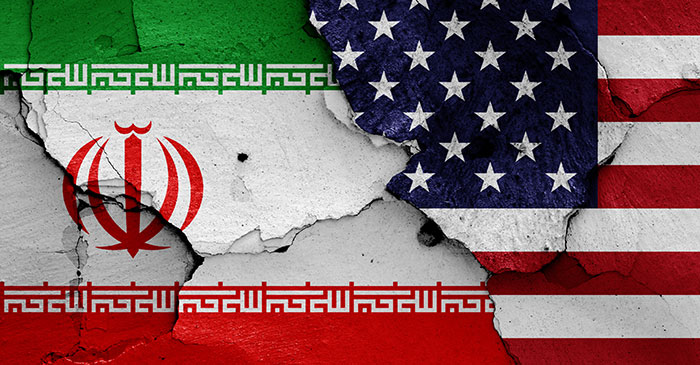
A new and serious risk emerged in early 2026. Some economists now predict a 50% chance of a downturn in 2026 — almost double earlier estimates — following the start of the Iran conflict, which is forcing economists to recalibrate their models. Money
Wars create energy price shocks. They disrupt supply chains. They rattle investor confidence. All three forces can quickly tip a slowing economy into reverse.
4. The AI Investment Question
AI spending has been a critical support beam for the economy. However, it may not hold forever. Deloitte’s downside scenario warns that AI investment could be overdone, leading to a sharp pullback in business spending in 2027 as companies reassess potential demand for related products. The Payoff Climb
Furthermore, companies are increasingly tapping financial markets to fund AI-related investments, which could create negative spillover effects if they are unable to repay their debt. The Payoff Climb
What Is Currently Keeping a Recession at Bay
Not every signal points downward. Several forces are actively holding the economy together right now.
- AI infrastructure investment continues to drive business spending and productivity gains
- Wage growth still outpaces inflation, giving workers real spending power
- Low layoff rates suggest employers are not yet panicking
- Tax cuts from the One Big Beautiful Bill Act may boost consumer spending in the second half of 2026
- Q1 2026 GDP came in at 2.0%, exceeding many forecasts
Polymarket prediction traders currently price a 77.5% implied probability against a US recession by end of 2026, driven by resilient Q1 GDP growth and steady unemployment at 4.3%. U.S. Department of Education
Therefore, while the risks are real, the majority view still leans toward avoiding a full downturn — barely.
The Federal Reserve’s Difficult Balancing Act
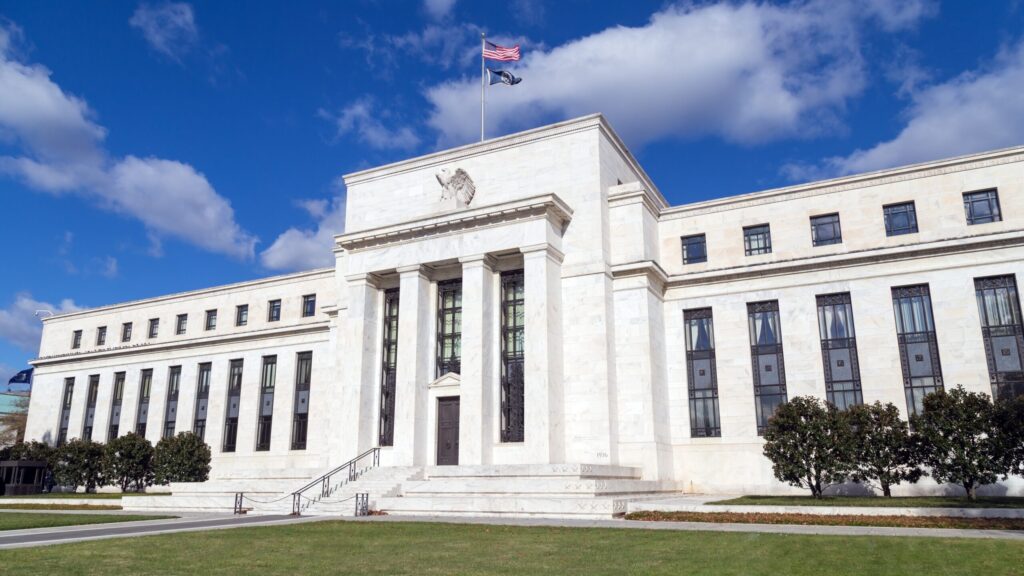
U.S. Federal Reserve
The Federal Reserve sits at the center of this economic tug-of-war. The IMF notes that near-term risks to growth and unemployment are balanced, but that rising energy prices pose upside inflation risks. Fox Business
Morgan Stanley forecasts the Fed will cut rates to a terminal range of 3.00–3.25%, with cuts expected as unemployment drifts higher toward 4.7% by mid-2026. RSM US
However, cutting rates too quickly risks reigniting inflation. Cutting too slowly risks strangling growth. It is, by any measure, a knife-edge decision.
What a Recession Would Mean for Everyday Americans
If the economy does tip into recession, the impact would be felt quickly and broadly:
- Job losses would accelerate, particularly in retail, manufacturing, and construction
- Home values could decline further as the housing market freezes up
- Stock market corrections of 20% or more would hit retirement accounts
- Credit card and loan rates would remain elevated, squeezing household budgets
- Small businesses would face reduced demand and tighter lending conditions
The people hit hardest, as always, would be lower-income workers with fewer financial buffers.
What Experts Say You Should Do Now
Financial advisors recommend taking practical steps regardless of which way the economy turns:
- Build or maintain an emergency fund covering three to six months of expenses
- Reduce high-interest debt aggressively before conditions worsen
- Review your investment portfolio for excessive risk exposure
- Avoid panic selling — short-term market drops rarely determine long-term outcomes
- Monitor your job security and consider upskilling now, before a downturn hits
Conclusion
The recession warning signals for the US in 2026 are real and deserve serious attention. Consumer confidence sits at historic lows. Business investment is slowing. Tariffs are biting. The Iran conflict is injecting new uncertainty into every economic model. And one of Wall Street’s most respected forecasters says a downturn is “almost inevitable.”
However, the economy has surprised skeptics before. GDP is still growing. Workers still have jobs. Tax stimulus is still working through the system. The soft landing is not dead yet.
What is clear is this: the margin for error is razor-thin. One more major shock — in oil markets, in financial markets, or in geopolitics — could be the tipping point. Americans, businesses, and policymakers should prepare accordingly. Because in 2026, hope is not a strategy.
Published by US Daily Briefs | usdailybriefs.com | May 9, 2026